Aug 092013
 

Today was the 68th anniversary of the last (for now) use of a nuclear weapon in anger, three days following the first such use. The city of Nagasaki was destroyed by the explosion of Fat Man, the world’s second plutonium bomb; the first one was used less than a month earlier at the Trinity test site in New Mexico.

Since then, more than two thousand nuclear explosions took place on or beneath the surface of the Earth as declared nuclear powers tested their designs.

 Posted by at 2:33 pm
Jul 172013
 

I am reading an interesting analysis of the conundrum NSA leaker Edward Snowden finds himself in: namely that he is facing the prospect of an asylum-less world.

It’s not that there are no countries who would grant him asylum. It’s that there are very few countries that are actually capable of delivering on that promise.

Should Snowden move to, say, Ecuador, I wonder how long before he’d be “rendered” by American agents?

Even getting there may prove to be a difficult task. The mere suspicion that Snowden may be on board the presidential aircraft of Bolivian President Evo Morales was sufficient to force the plane to land in Vienna and be searched, in an almost unthinkable breach of diplomatic protocol. (Actually, we don’t exactly know what happened, as there are too many conflicting stories. The airplane may simply have landed for fuel. Why it needed to be searched, though, is a darn good question.)

Behind Snowden’s difficulties is the fact that we live in the era of a lone superpower. There are no checks and balances that would limit the United States’ use (or abuse) of its nearly limitless powers.

So then, perhaps Snowden did the smart thing, flying to Hong Kong first and then to Moscow, China and Russia being among the few countries that are beyond the reach of the CIA, where Snowden could still expect reasonably civilized treatment. (North Korea may also be beyond the reach of the CIA, but Snowden knew better than to go there.) Of course, there is something deeply hypocritical about a person who leaks documents in defense of free speech and individual rights, seeking asylum in the country that recently jailed members of a punk band. I hope once Snowden is granted asylum in Russia, he’ll take the time to visit the still jailed members of Pussy Riot in prison.

As to the rogue superpower… I keep asking myself if that is really such a bad thing. Two millennia ago, Roman hegemony resulted in a world that remained peaceful and prosperous for centuries. Pax Americana may not be perfect, but it may mean a decent and peaceful life for generations to come. Is this an acceptable moral compromise?

 Posted by at 6:35 pm
Jul 172013
 

Browsing the Web this morning, I ran across a reference to a Judge A. Sherman Christensen, also known as the “sheep case” judge, who tried a case in 1955 when Utah ranchers sued the federal government for the death of much of their livestock due to radioacive fallout from atmospheric nuclear tests conducted in Nevada.

Christensen, relying on evidence offered by government expert witnesses, ruled against the ranchers.

Astonishingly, 23 years later Christensen set aside his own judgment, having become convinced that fraud was committed in his courtroom by the Federal government.

Even more astonishingly, an appeals court rejected Christensen’s findings. The ranchers never had a chance. Neither did their sheep.

 Posted by at 4:58 pm
Jul 152013
 

The NSA engaged in domestic surveillance on a massive scale. It collected information on both foreign nationals and US citizens. It collected large amounts of data indiscriminately. It did so in secret, with little oversight. It did so with the collaboration of major telecommunication companies.

Sounds familiar? Perhaps. But what I am describing is project SHAMROCK, an NSA program terminated in 1975 that collected telegrams sent to or from the United States.

Arguably, the situation is somewhat better today, as the NSA is now under Congressional oversight and it has (supposedly) internal procedures in place to prevent the unlawful use of data that they collect. That is, if you believe their statements. But then, they made similar reassuring statements back in 1975, too, before details about SHAMROCK came to light.

The bottom line, it seems to me, is that governments have the technological means, the capacity, and the willingness to engage in large-scale surveillance of their own citizens. No guarantees against an Orwellian nightmare can come from futile attempts to limit these capabilities. The genie cannot be put back into the bottle. Only the openness and transparency of our political institutions can guarantee that the capabilities will not be abused.

 Posted by at 12:02 pm
Jul 032013
 

Fundamental rights in Hungary

Yesterday, the European Parliament discussed a report by the EU’s Civil Liberties Committee on fundamental rights in Hungary.


The report was accepted today with 370 votes for, 249 against.

The result was dismissed in advance by Hungary’s Prime Minister Viktor Orban, who basically claimed that this was a vote by “socialists, liberals and greens”, “against Hungary”.

It wasn’t. It was a vote of concern regarding the policies of Orban’s government and party. Mr. Orban should know better and remember how it was a habit of the communist leaders that he so despises to dismiss criticisms of their regimes as the work of enemies of their nation.

 Posted by at 10:35 am
Jun 172013
 

The presumed yottabyte capacity of the new Utah Center of the NSA, about which I commented a few days ago, is still making the rounds on news channels and news cites. Someone calculated that a yottabyte is equivalent to 500 quintillion printed pages. CNN helpfully added that a stack of paper with this many pages could reach all the way to the Moon and back 66 million times.

What they ought to have calculated is the size and volume of 250 billion 4 TB hard drives.

A lighter hard drive weighs about 0.4 kg. 250 billion of them? That would be 100 billion kilograms. Or 100 million metric tons. Or roughly 1000 of the largest cargo ships, each the size of a small city, filled to capacity with hard drives.

A hard drive is about 15/16″ tall. That’s 2.38 centimeters. 250 billion of them? Why, it’s a stack tall enough to reach all the way to the Moon and back 8 times.

The volume of a standard hard drive is about 342 cubic centimeters. 250 billion? That would be just a tad under 0.1 cubic kilometers (8.56 × 107 cubic meters, to be a bit more precise). That would be a field that is a kilometer square, filled with hard drives to the height of a small-ish skyscraper, about 25-30 stories high. Large as the Utah facility is, it’s by no means large enough.

Some might want to point out that if the NSA used flash memory instead, the volume (and also the power consumption) would go way down. True. But the price would go up. Flash memory is still roughly an order of magnitude more expensive than hard drives. So if the NSA wanted to build a yottabyte facility using flash memory, instead of spending 1.5 times the GDP of the entire United States, they’d be spending 15 times that amount. Or roughly three times the “gross world product”, estimated at 83 trillion US dollars.

Perhaps CNN and friends should do a little more math, not just to impress their readers but also to fact check the stuff that they report. Would be nice.

For illustration, I chose a Hungarian bank note from 1946, reportedly the highest denomination ever printed anywhere: it is a 100 quintillion pengő note. It is still far short of a yottapengő: you would need 10,000 of these banknotes. Then again, by the time hyperinflation ended and a new currency (the Hungarian forint, still in circulation) was introduced, the exchange rate was 400 octillion pengős to the forint; that would be 400,000 yottapengős.

 Posted by at 11:39 am
Jun 112013
 

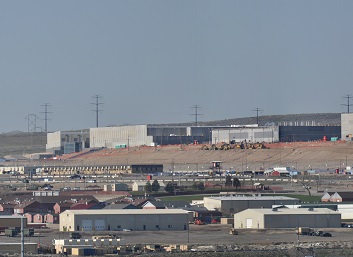
In reaction to the news about large scale NSA surveillance, the new NSA data storage facility currently under construction in Utah has been mentioned frequently. Along with the factoid that this facility will supposedly be able to store a yottabyte of data.

Yottabyte? That is a lot of data. And when I say a lot, I mean A LOT. An incredibly large amount of data. And in this case, I mean “incredible” in the literal sense of the word, as in not credible. Despite the fact that this tidbit even appears on Wikipedia.

A yottabyte is a trillion trillion bytes. A trillion terabytes, in other words.

The largest commercially available hard drives currently hold about 4 terabytes of data. To store a yottabyte, you would need a quarter trillion, or 250 billion 4TB hard drives. That would amount to about 35 hard drives for each living person on the planet.

A 4 TB hard drive consumes about 3-6 W of power. Say, 4 W on average. 250 billion drives would therefore consume a trillion watts of power. Which is roughly the peak electrical power generation capacity of the entire United States. We know that the Utah facility will consume a lot of power, but the figure I’ve seen mentioned in one article was a much more modest 75 megawatts. Which is about one ten thousandths the amount of power I just calculated.

Then there is the price. The retail price of a 4TB drive is a tad under $200 these days. Presumably, they would cost a lot less if purchased in bulk; say, $100 per drive, including power supplies, interface circuits, whatever. So 250 billion 4TB hard drives would only cost 25 trillion US dollars.

That is, more than one and a half times the United States GDP.

However important it is for the United Stasi of America to keep a watchful eye over every citizen of the world, I don’t think a price tag like this is feasible. Indeed, the cost of the facility is a lot less, reportedly around 1.5 to 2 billion dollars. Let me round it up to 2.5 billion; after all, government projects are rarely completed within budget. And let me assume that all that money is spent on data storage. Well… that’s still not a yottabyte. It’s one ten thousandths of a yottabyte. Or 0.1 zettabytes. Or 100 exabytes.

Still a staggering amount, but much more modest. After all, large service providers like Google are already storing hundreds of petabytes, even exabytes of data. And the entire world may already have collected a few zettabytes.

But not yottabytes. Never mind the NSA; the world as a whole is still a long way away from a yottabyte. Probably a couple of decades, even assuming continuing exponential growth in global data storage capacity.

In any case, a yottabyte is an insane amount of data, even for an institution like the NSA. It is sufficient to store about eight years worth of broadcast quality video for each individual living on the planet. Or, if you are content with lower video quality, a complete visual record of the entire life of every living person on the planet could easily fit in a yottabyte.

Besides… is it really believable that the NSA sits on top of a technology that increases the efficiency of data storage by 4-5 orders of magnitude, a factor of 10,000 or more? There are some really smart people working for the NSA, to be sure, but they are not space aliens. Exotic storage technologies may be in the works in storage technology labs, but I suspect that when they become practical and usable, we will first see them in our next generation gadgets, not secret US government data centers.

So no, the NSA is not going to store a yottabyte of data, breathless news reports and the hype notwithstanding. Not even a zettabyte. A few exabytes, maybe.

Which is still a lot. Far too much, in fact, for my comfort.

 Posted by at 12:40 pm
Jun 092013
 

John Feffer, writing for the Huffington Post, expresses his grave concern over political developments in Hungary in recent years. He suggests that Hungary may be symptomatic of a cancer that is spreading across Europe: a rejection of liberal values, a rise of nationalism and xenophobia, combined with a growing distrust in European institutions.

I wish I could argue that Feffer is wrong. But he isn’t. Not only is some of the political rhetoric coming from Hungary frightening, but so is the attitude of ordinary people towards the country’s Roma minority, towards Europe, towards Western values.

Yet as Feffer notes, Hungary is not alone: similar sentiments are also on the rise elsewhere in Europe. And unless the EU manages to get its economy under control, things will get worse. Indeed, I have a feeling that the worst is yet to come, and that things will get a lot worse before they’ll get any better.

 Posted by at 3:56 pm
Jun 082013
 

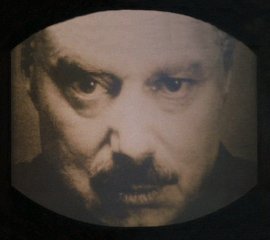
Yes, it’s Orwellian, and this time around, it’s no hyperbole.

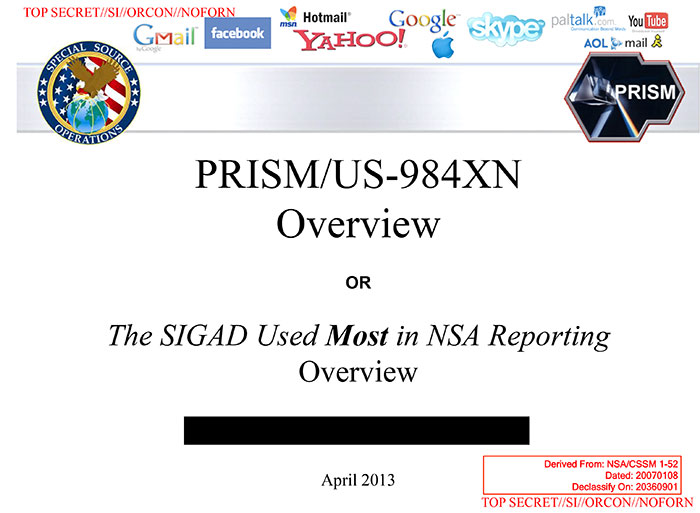
The US government apparently not only collects information (“metadata”) on all telephone calls, they also have the means collect e-mails, online chats, voice-over-IP (e.g., Skype) telephone calls, file transfers, photographs and other stored data, and who knows what else… basically, all data handled by some of the largest Internet companies, including Google, Facebook, Skype and others.

Last summer, I decided to revamp my e-mail system. The main goal was to make it compatible with mobile devices; instead of using a conventional mail client that downloads and stores messages, I set up an IMAP server.

But before I did so, I seriously considered off-loading all this stuff to Google’s Gmail or perhaps, Microsoft’s outlook.com. After all, why should I bother maintaining my own server, when these fine companies offer all the services I need for free (or for a nominal fee)?

After evaluating all options, I decided against “outsourcing” my mail system. The fact that I did not want to have my mail stored on servers that fall under the jurisdiction of the US government played a significant role in my decision. Not because I have anything to hide; it’s because I value my privacy.

Little did I know back then just how extensively the US government was already keeping services such as Google under surveillance:


From the leaked slides (marked top secret, sensitive information, originator controlled, no foreign nationals; just how much more secret can stuff get?) and the accompanying newspaper articles it is not clear if this is blanket surveillance (as in the case of telephone company metadata) or targeted surveillance. Even so, the very fact that the US government has set up this capability and recruited America’s leading Internet companies (apparently not concerned about their reputation; after all, a presentation, internal as it may be, looks so much nicer if you can splatter the logos of said companies all over your slides) is disconcerting, to say the least.

True, they are doing this supposedly to keep us safe. And I am willing to believe that. But if I preferred security over liberty, I’d have joined Hungary’s communist party in 1986 instead of emigrating and starting a new life in a foreign country. Communist countries were very safe, after all. (And incidentally, they were not nearly this intrusive. Though who knows how intrusive they’d have become if they had the technical means available.)

One thing I especially liked: the assurances that the NSA does not spy on US residents or citizens. Of course… they don’t have to. This will be done for them by their British (or Canadian?) counterparts. No agency is breaking any of the laws of its own country, yet everybody is kept under surveillance. And this is not even new: I remember reading an article in the Globe and Mail some 20 years ago, detailing this “mutually beneficial” practice. I may even have kept a copy, but if so, it is probably buried somewhere in my basement.

Meanwhile, I realize that the good people at the NSA or at Canada’s Communications Security Establishment must really hate folks like me, though, running our own secure mail servers. I wonder when I will get on some suspect list for simply refusing to use free services like Gmail that can be easily monitored by our masters and overlords.

 Posted by at 7:17 pm
Jun 012013
 

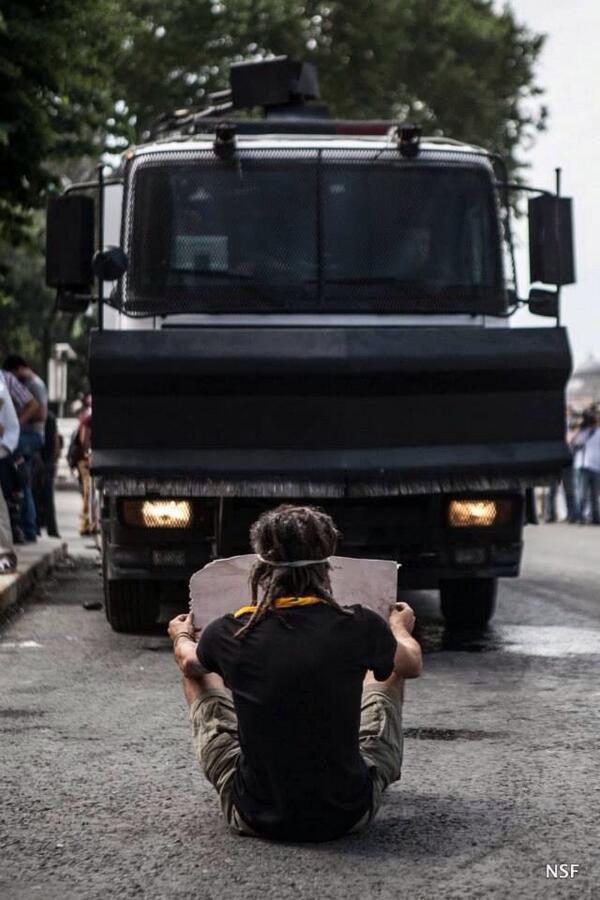
The good citizens of Istanbul decided that they’ve had enough: they need to defend Turkish democracy against a semi-autocratic government.

I am enough of a conservative to think that street riots and settings things on fire rarely (if ever) solve problems, but I certainly understand the protesters’ concern and frustration.

From: CNN Breaking News [mailto:BreakingNews@mail.cnn.com]
Sent: Saturday, June 01, 2013 4:31 PM
To: textbreakingnews@EMA3LSV06.TURNER.COM
Subject: CNN Breaking News

Turkish authorities have detained 939 people in connection with anti-government protests across 30 provinces, Interior Minister Muammer Guler told Turkey’s semi-official Anadolu news agency on Saturday.The demonstrations began this week in protest of government plans to level a park in Istanbul. But many demonstrators say they now are protesting against authoritarian policies of Prime Minister Recep Tayyip Erdogan.

As demonstrators clashed with police Friday in Istanbul, protests spread to several other cities, including Ankara, the capital, and the port city of Izmir.

 Posted by at 5:00 pm
May 282013
 

The destruction of public radio in Canada continues: Our beloved bureaucrats at the Canadian Radio-television and Telecommunications Commission decided to allow the CBC to air commercials on Radio 2.

Dear CRTC: the CBC is not a private company. It is partially funded by the Canadian public. Its mandate is not to make money but to promote Canadian culture. Instead of allowing this travesty, how about holding them to account for the on-going destruction of a national treasure?

 Posted by at 2:15 pm
May 272013
 

Even as the Hungarian ultra-right is seeking closer ties with the Arab world, in search of an ally against a common enemy (Jews), none other than the English edition of Al Jazeera aired a half-hour documentary about the rise of the right, the rise of anti-Semitism, the plight of the Roma, and the increasingly authoritarian nature of Viktor Orban’s government.

Meanwhile, the Franco-German cultural channel Arte broadcast a 50-minute German-language documentary titled “Ungarn – Demokratie oder Diktatur?” (Hungary: Democracy or Dictatorship?) expressing similar concerns, but also providing more historical background.

Of course, apologists for the Orban government will dismiss these, like they dismiss all criticism, as liberal propaganda produced by naive (or worse, corrupt) Westerners who know nothing about Hungary, do not speak the language, and were duped by traitorous liberals, former communists, or Magyar-hating Jews. Yes, and pigs fly, too.

 Posted by at 8:33 am
May 222013
 

So Mr. Harper finally answered questions about the scandal brewing in Canada’s Senate. I found his comments rather pathetic, unfortunately.

In particular, this one: “it was Mr. Wright’s money, it was his personal money that he was repaying to the taxpayers on behalf of Mr. Duffy, it was his personal decision and he did this is his capacity as chief of staff, so he is solely responsible and that is why he has resigned.”

If Mr. Harper is speaking the truth, he should resign as he is obviously incompetent and out of touch even with his innermost circle of staff members. If he is lying, he should resign for, well, for blatantly lying to the people of Canada and for throwing his closest friends and associates under the truck for the sake of staying in power.

What an unsightly spectacle.

 Posted by at 10:29 pm
May 132013
 

Upon watching this video produced by Newt Gingrich, I can only wonder: What was he thinking? What was his team thinking?

Does Newt Gingrich, the technologically savvy, well-educated former House speaker and presidential wannabee really not know that the thing he is holding in his hands is called, indeed has been called for more than 15 years… wait a moment… a smartphone?

But then, a commenter on YouTube suggested that it should be called a horseless telephone. I like the idea.

 Posted by at 9:10 pm
Apr 252013
 

Twenty seven years ago tonight, an ill-prepared overnight crew at reactor #4 at the Chernobyl nuclear power station in the Ukraine began an unauthorized experiment, originally scheduled to run during the day, and designed to test how much power the reactor was able to supply while it was shutting down, keeping emergency systems powered while waiting for backup generators to kick in. Trouble is, this particular reactor type was known to have instabilities at low power even at the best of times. And these were not the best of times: the reactor was operated by an inexperienced crew and was suffering from “poisoning” by neutron-absorbing xenon gas due to prolonged low-power operations earlier and during the preparation for the test.

The rest, of course, is history: reactor #4 blew up in what remains the worst nuclear accident in history. A large area around the Chernobyl plant remains contaminated. The city of Pripyat remains a ghost town. And a great many people were exposed to radiation.

The number of people killed by the Chernobyl disaster remains a matter of dispute. Most studies I’ve read about estimate several thousands deaths that can be attributed to the accident and the resulting increased risk of cancer. But a recent paper by Kharecha and Hansen (to be published in Environ. Sci. Technol.) cites a surprisingly low figure of only 43 deaths directly attributable to the accident.

This paper, however, is notable for another reason: it argues that the number of lives saved by nuclear power vastly exceeds the number of people killed. They assert that nuclear power already prevented about 1.8 million pollution-related deaths, and that many million additional deaths can be prevented in the future.

I am sure this paper will be challenged but I find it refreshing. For what it’s worth, I’d much rather have a nuclear power plant in my own backyard than a coal-fired power station. Of course the more powerful our machines are, the bigger noise they make when they go kaboom; but this did not prevent us from using airplanes or automobiles either.

 Posted by at 9:34 pm
Apr 162013
 

My friend and high school classmate, Laszlo Varro, teaches mathematics these days at the Chinese International School in Hong Kong. He is also an avid traveler, occasionally sending missives from far off places like a small village in Vietnam, a spot off the beaten track in the Arizona desert, or a mountainside in the Andes.

Perhaps this is how it came to be that recently, Laszlo led a group of his students to, of all places, North Korea. They came back with many memories to share, and plenty of pictures and videos. Laszlo put some of those on YouTube.

Of the four clips, perhaps my favorite is the one he titled “Fun in North Korea”, because this is the one clip that offers the most background glimpses at daily lives in the Hermit Kingdom. The daily lives of the privileged, I hasten to add; Pyongyang is a privileged city, and we must not forget that even as we watch these clips, there are tens if not hundreds of thousands who suffer in North Korean labor camps (many born there) and many others may be near starvation.

One thing I found particularly interesting… the North Koreans are elegant. For instance, when schoolgirls sing to honored guests at a school concert, they do so with an almost Japanese grace. Perhaps this, more than anything, indicates to me that North Korean communism is not simply a copy of Eastern European communism, with oafish workers representing the best of the proletariat.

But my friend’s most important message is that Kim Jong-un’s boastful rhetoric notwithstanding, North Korea did not appear to him as a country preparing for war.

 Posted by at 3:48 pm
Apr 132013
 

So pretend for a moment the following: In Moscow, the French ambassador gives an interview to a local French-language TV program that is broadcast to the expatriate French community in Russia. As he speaks, you notice that the flag behind him is not the French tricolor but Quebec’s flag, the Fleurdelisé. How would you interpret this? Exactly what is the ambassador trying to say?

Of course France’s ambassadors are generally more diplomatic than that. Even if they were to support Quebec’s independence from Canada, I doubt they would do so in such a crudely undiplomatic manner.

So then, when Hungary’s ambassador here in Ottawa gave an interview to Magyar Képek, a Hungarian-language television program broadcast on OMNI TV throughout Canada, why did he choose to do so standing in front of not Hungary’s tricolor, but the flag of Székely Land (also known as Szekler Land, or Székelyföld in Hungarian, a territory in Eastern Transylvania inhabited by Hungarian-speaking ethnic Székelys)?

I cannot help but wonder about the thinking behind this.

 Posted by at 10:27 pm
Apr 112013
 

The National Post has an interesting set of infographics detailing the strength of North Korea’s conventional forces.

I made an attempt to create a condensed version:

But if it’s too condensed, it kind of loses its punch, so it might be wiser to study the original. The bottom line: they have a scary number of surface ships, submarines, landing craft, torpedoes, aircraft both relatively modern (e.g., Mig-29) and ancient (biplanes!), and a huge army with a large number of artillery pieces, shoulder-launched surface-to-air missiles, SCUDs, you name it. Probably some non-conventional (chemical) stuff, too, that they would not hesitate to use. And on top of that, maybe a few crude nukes, albeit without decent delivery systems.

Then again… remember Saddam Hussein’s scary conventional army back in 1991, the world’s third or fourth largest at the time, and battle-tested during the Iraq-Iran war, equipped with SCUDs and WMDs? Didn’t do him much good, did it. Seeing SCUDs arrive in Saudi neighborhoods was a scary sight, but in the end, the damage they did was negligible. So maybe the numbers do not tell the whole story after all.

Still, a war in the Korean peninsula would be devastating for South Korea especially, but also for the world economy. And although I have no doubt that North Korea would vanish as a result, reintegrating the North would be a task that’s perhaps even harder than winning the war.

 Posted by at 9:04 am
Mar 292013
 

This article appeared today in Hungarian in HVG (World Economics Weekly), a Hungarian news magazine. I felt compelled to translate it into English and publish it here in my blog.

Belated message to former young democrats from a young democrat

March 29, 2013
Author: Nóra Köves

An essay about the quarter century old Fidesz [Alliance of Young Democrats] party by one of the student protest participants. The author was overcome by a strange sensation while standing in the courtyard of the party’s headquarters, with a copy of the party’s 1989 program pamphlet retrieved from the trash.

Fidesz and I are roughly of the same age. I barely learned to speak when Viktor Orban gave his memorable speech during the reburial ceremony of Imre Nagy [Hungary’s prime minister during the failed 1956 revolution, executed in 1958 and rehabilitated in 1989], in which he stated that “in the sixth coffin lies not just a murdered youth but our own next twenty or who knows how many years.” Back then nobody thought that nearly 25 years later the last nail in this very coffin will be hammered in by the same enthusiastically orating young man. On June 16, 1989, as my parents were listening to this young man in their small highrise flat in the town of Zalaegerszeg, they most certainly did not believe that nearly 25 years later their daughter would be fighting for that free and democratic Hungary which they thought was a done deal as they leaned back in their armchairs. They did not think that the very same young democrats who fought for the freedom of a country with many others back then will attempt to take it away a quarter century later.

A few years ago I would not have thought either that my knowledge of international human rights law, which I spent long nights studying, will be used not in Africa or the Middle East, but I will have to stand up for human rights in Hungary. It did not enter my mind that one day I’d reach the point where, within the rules of active civil disobedience, I’ll be using my own body to defend democracy and a lawful constitutional state, because no other means remain at my disposal. And I certainly would not have thought that one day I’d be protesting in the courtyard of the party headquarters of Fidesz, or that I’d be sitting in pouring snow on the stairs of Parliament, demanding a constitution, democracy, and rule of law, accepting the consequences of civil disobedience with both acts, because I see no other way to save the country in which I would like to live and raise children.

Because I dream of a Hungary in which the rule of law and human dignity are fundamental values, in which all people are created equal, in which families are tied by love and not by the government’s conceptual framework. Where our homeless neighbors receive compassion and real help, not police harassment and misdemeanor fines. Where disadvantaged children can look to the future with hope, knowing that they have a chance to become what they would like to be. That this is now only a dream is a result of the fact that those one-time young democrats who 25 years ago fought for similar values forgot it all by now, and wasted away our recently acquired freedom with their tyrannical lust for power.

As I was protesting as a young democrat in the courtyard of the one-time young democrats, carrying the party’s discarded 1989 pamphlet, it occurred to me that in their one-time party office Orban and others must have felt the same gratifying excitement that we did. They must have felt that they were doing something for the rule of law, for the country in which they wanted to live. I stood there and failed to understand how this feeling, which thoroughly permeates a person and leaves a lasting memory, could have disappeared so without a trace and what may have replaced it. I did not have to wait long for the answer: it suddenly appeared in the form of several large, muscular, especially intimidating “security guards”, who were exactly like the ones who hired them: demands for “constitution, democracy, and the rule of law” meant nothing for them because they only believed in force and brutality, and considered money more important than freedom.

But I know that I have nothing to fear. I need not fear from muscular security, from the stick-wielding participants of the “peace march” who frightened others with acid, from the threatening letters, or even from the groundless accusations of the government’s smear propaganda. I do not have to fear because my trust is infinite in my own generation, in those youth who already tasted freedom, and I know that even if sometimes they awake late, in the end they won’t allow freedom to be wasted away. In this country, we will not permit the strong to oppress the weak, or to dismiss as criminals those who are poor or are different from the majority. We will not permit our universities and cultural spaces to be subject to the state’s tyranny. We will not permit them to trample on our Constitutional Court, we will not permit them to steal our future! And let there be no misunderstanding. Given enough time, no generation permits this. Members of Fidesz think that freedom is not important to the people. I think they are wrong. Voters may not appreciate the significance of specific steps, but when they feel on their own skin the harmful effects of this government, the shackles of the fourth amendment of the constitution, their attention will no longer be diverted even by reduced utility bills.

Fidesz and I are approximately of the same age. We are of the same age as this fragile democracy, which they right now are doing their best to tear apart, just so that they can stay in their comfortable velvet chairs longer, forcing onto us their misguided fantasies. I repeat, our generation as democrats will not permit this. We will respond to the government’s infinitely violent and aggressive, exclusionary and legally depriving policies again and again with determined – ever more determined, but nonviolent – action and we will show that freedom, equality, solidarity, tolerance and love are the only way to lay down the foundation of a functioning, democratic, lawful state. In 1989, Fidesz also knew this. This is why I promise that we will continue showing them a mirror until the Hungarian people choose to replace them, or until they acknowledge their former selves and ideals, and the fact that they betrayed every single one of them.

 Posted by at 11:20 pm
Mar 192013
 

No, I am not trying to cast rhetorical doubt on the assertion that Assad’s government has used chemical weapons in the on-going civil war in Syria. As a matter of fact, I find the assertion believable and credible.

But, lest we forget what happened exactly ten years ago… Having just finished wading through the Mother Jones timeline about the lies and deceptions leading up to the Iraq war, I have to ask myself: can these assertions be really believed, or should we demand corroborating evidence?

CNN is certainly ready to go to war. Their talking heads are already discussing what is needed beyond air strikes.

 Posted by at 8:32 pm