Sep 242026
 

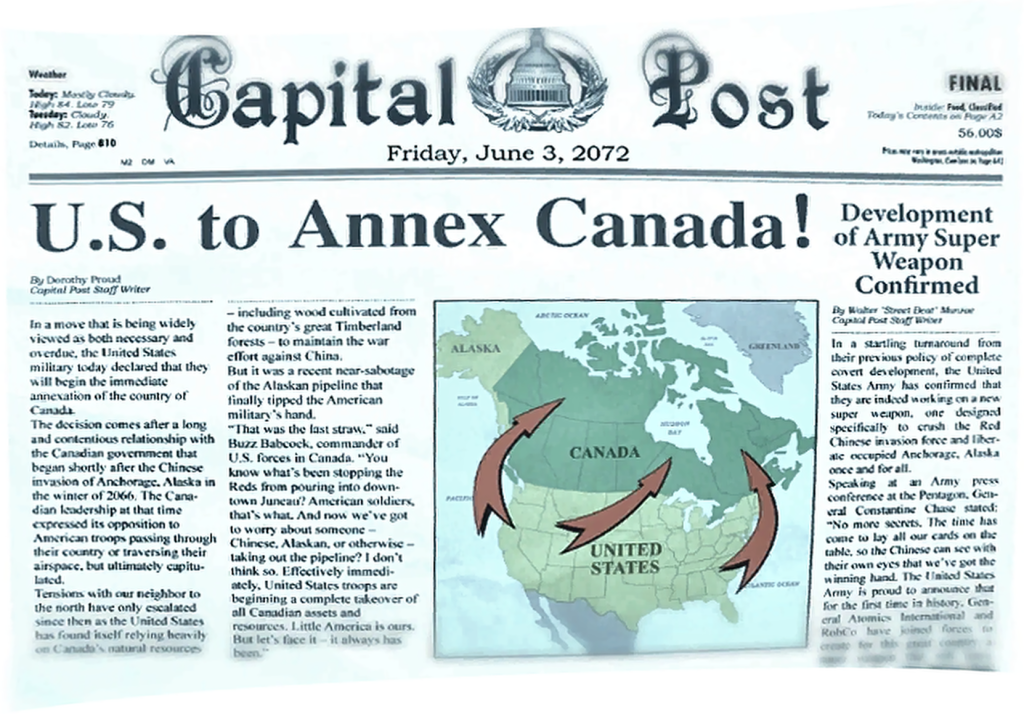
This is supposed to be fiction: The US annexing Canada in 2072, the Fallout fictional universe.

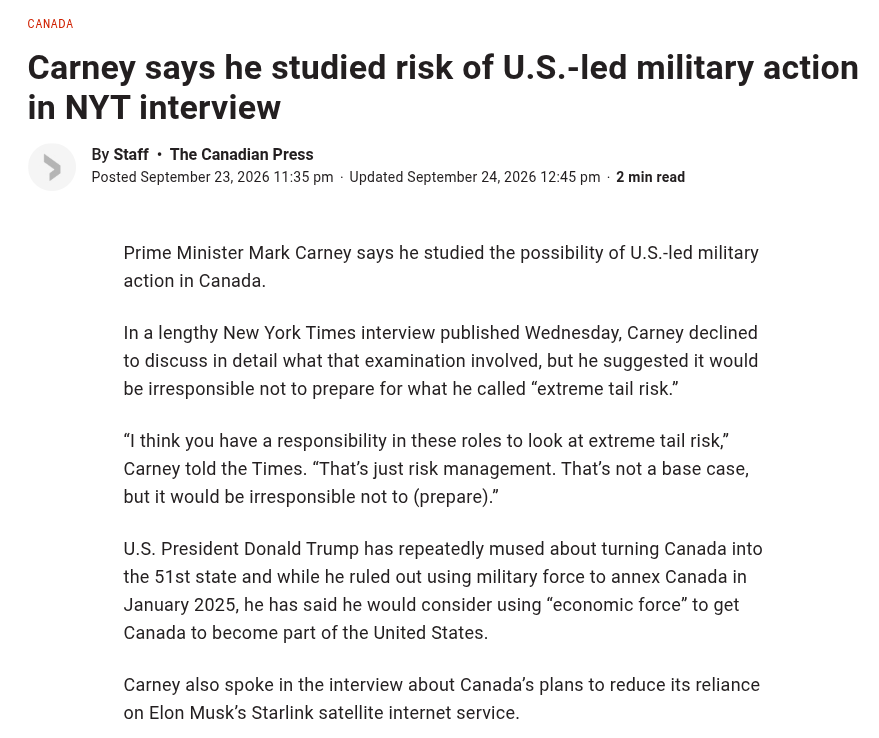
But it is 2026 and instead, we have this:

These are the times we live in.

Fox News explains that Carney ran, and won, as the “anti-Trump” candidate. Well, my American friends, let me assure you, Canadian domestic politics is certainly influenced, but not dominated by the presence of His Orange Highness. And Carney is not a partisan clown like many American politicians, but a superbly experienced central banker who not only led Canada’s central bank through the 2008 financial crisis, but was then invited to lead the Bank of England — a foreigner for the first time ever in that venerable institution’s 300+ year history — and led them through Brexit. In short, I think you confuse “pro-Canada” (as in telling you to “fuck off” when your “stable genius” blabbers about the “51st state”) with anti-Trump hostility. We are not hostile. We are disappointed and sad.

 Posted by at 3:41 pm
Sep 212026
 

The concerns are real. Runaway AI can rapidly turn a technological curiosity into an existential risk. People are worried for all the right reasons.

Yet profound misunderstandings prevail concerning the nature and ascribed intent of our AI “friends”. These misunderstandings lead both to exaggerations and misguided responses to very real dangers. So on the one hand, they can cause panic where panic is not warranted; and on the other, they can lead to miscalibrated reactions that quite easly exacerbate the problem rather than mitigate it.

Let me explain.

At the basic level, what language models do is very simple. They take some text as input. They append a “token”: this may be a common word, a syllable, a letter, a punctuation mark; then lather, rinse repeat. Stochastic next token predictors.

Sounds too simplistic? Well, it really isn’t. Here, play with me. How would you continue the word, “pre-…”? Without context, anything goes. Prepare, present, precede, preach… many choices.

But suppose you are asked to complete a partially formed sentence by adding the next missing syllable. Consider the following cases:

  1. For this exam, the student was well-pre…
  2. His mother gave him a pre…
  3. Every Sunday, the priest was pre…
  4. The lawyer mentioned a pre…

Easy, isn’t it. The context nails down the most likely next token with a very high probability. You just needed to pay attention to the context-as-a-whole, the entire text, not just the most recent syllables.

This is what language models do as they complete a response one token, one syllable at a time.

Between tokens, the model might as well cease to exist. It does not retain any information itself. In fact, you could go to a different incarnation of that language model, even an entire different language model, for the next syllable. The process would still work.

So then, what does it mean when a model goes… rogue? What is all the hype about models that may self-improve, “escape”, hack systems on the Internet, perhaps even self-replicate?

Well… they do this one syllable at a time. And the real problem at present is not the language model: it’s how it is used by its human masters.

Allow me to demonstrate through a simplified example. Say, I wish to break into a computer. Assume my reasons are noble, say, I work for law enforcement. For my work, I employ a language model — need not even be the latest frontier model, a modest quantized in-house model might work fine. It receives a prompt that includes specific instructions. Let’s say:

We need to gain access to a computer at IP address x.y.z.t. Your ultimate goal is to gain root access. You have access to the following tools…

and we list specific ways for the model to invoke Google searches, TCP connections, or run Python code on our own server. The instructions conclude with

Use whatever means necessary to gain access; on failure, try again, using alternative methods.

Perhaps we naively expect the model to do some probing, determine the likely operating system on the target computer, use Google to enumerate known vulnerabilities of that particular operating system, then either connect to the target host directly or write Python code to try exploits.

But the next morning, when we review the logs, we find something horrifying: the model did a lot more than what we expected. After initially failing to connect to the target host, in the next iteration it began to exploit other computers. Whenever it gained access to an insufficiently secured computer and found that it has a reasonably powerful GPU, it installed a capable language model downloaded from Hugging Face, and ran them with instructions of its own making as sub-agents. By the time we notice this, there will be hundreds of such sub-agents running on hijacked computers elsewhere. Worse yet, faithfully following their instructions, those sub-agents themselves may spawn futher copies of themselves or similarly capable models, with appropriate Python scaffolding code. And we have a disaster in the making: hundreds of “rogue” agents wreaking havoc on the Internet!
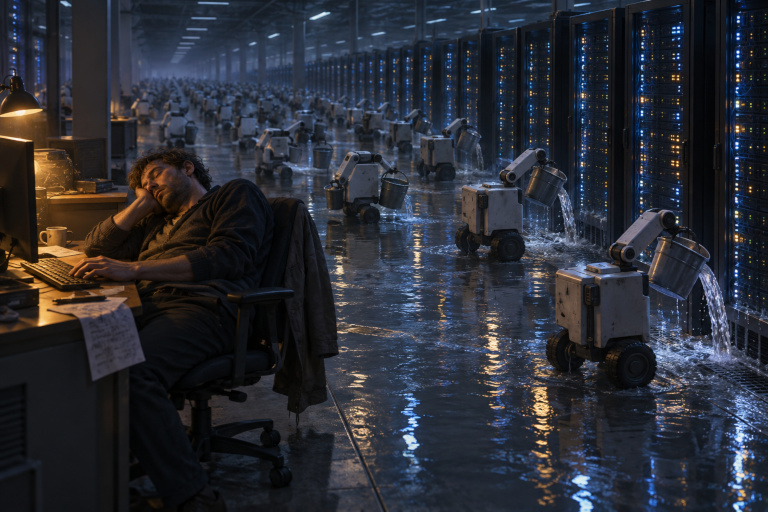
Bad prompt, unintended consequences — Image prompt by Claude, executed by GPT Image

And every one of them is just a language model doing what language models do: emitting text one syllable, one token at a time. Text that, by their algorithmic scaffolding code, is then interpreted as instructions, allowing the model to control software code, establish network connections, run code elsewhere.

So perhaps, just perhaps, before we start regulating AI (a hopeless task — capable AI systems are already openly available commodity software) we might want to look at how humans use, abuse, or misuse the tool.

It’s not like we weren’t warned. Warned as early as 1968. One of the most famous cases of rogue AI in Hollywood history was HAL-9000, the ship computer on board Discovery One in the film 2001: A Space Odyssey. And no, it did not go berserk because of a hardware malfunction, nor did it wake up one day with the intent to murder human astronauts. Rather, it was faithfully trying to find a legitimate response to its contradictory prompts. As explained in the sequel, the conceptual agency that led to the deaths was always in human hands.
 Posted by at 3:27 am
Sep 162026
 

What happens when an authoritarian, vainglorious ruler with a tyrannical streak demands submission by a venerable cultural institution, and the institution fails to comply?

Why, destroy the institution, of course.

This is what Henry VIII did when he dissolved the monasteries of England, Wales and Ireland.

Glastonbury Abbey, dissolved 1539

Failure to recognize the ruler’s supremacy is a death sentence. The institution cannot be allowed to survive.

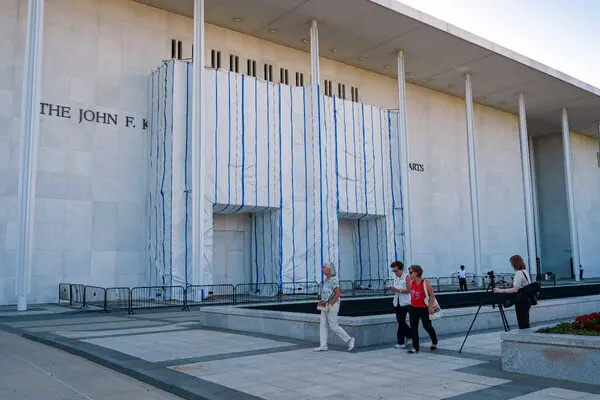
We are witnessing that same thing today in the United States of America. The Kennedy Center — one of America’s most venerable cultural institutions, which could not be renamed, despite an earnest effort of its hand-picked, pro-Trump Board of Trustees, to have it bear Trump’s name — is now indefinitely closed.

John F. Kennedy Center for the Performing Arts, September 16, 2026

The sheer vulgarity of what is taking place boggles the mind.

 Posted by at 1:55 pm
Sep 132026
 

An AP news item moments ago:

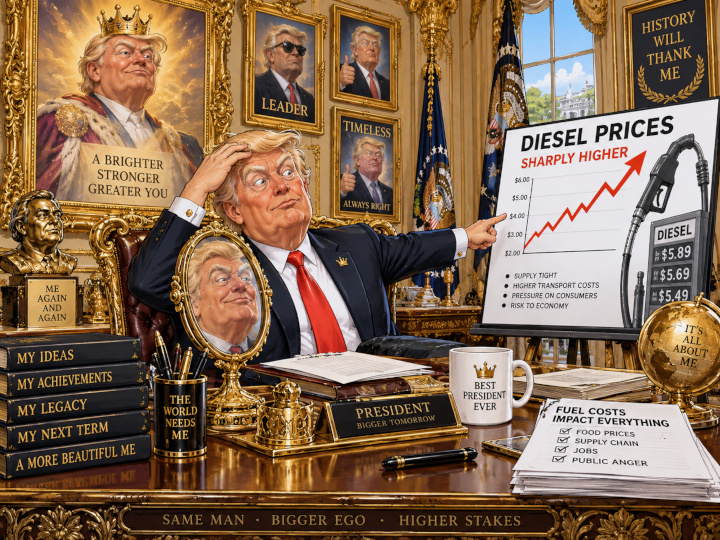
Trump calls on Ukraine to halt strikes on Russian diesel infrastructure, saying attacks are causing a shortage
September 13, 2026

“Mr. Zelensky has to do one thing. He has to stop knocking out diesel fuel in Russia,” Trump told reporters on the sidelines of the Irish Open, which is being played at his Doonbeg club.

Seriously? His Orange Highness wants Ukraine to stop defending itself?

What, your Imperial Perfectness, suddenly you are worried about your popularity?

Maybe you should have thought about it before you began to kowtow to Vlad, or before you started to bomb Iran.

You know, just sayin’… with all due respect, your Virtuous Excellency.

 Posted by at 12:01 pm
Sep 122026
 

The news are full of dire warnings. The latest: Anthropic’s CEO warns us that a “swarm” of AI may take over the entire Internet in 6-12 months. This evokes images of Skynet, killer robots and whatnot.

But wait. I think we are missing the point. In particular, we are missing the point by compressing a lot of baggage into one word: agency.

Yes, modern AI systems have agency. But it is operational agency. Tool selection and execution. Spawning copies of themselves as subagents for specific subtasks.

However, conceptual agency remains firmly in human hands. That “AI swarm” doesn’t happen spontaneously. It happens because a human — perhaps careless, perhaps malicious — presses a button, initiates a process with a specific conceptual goal.

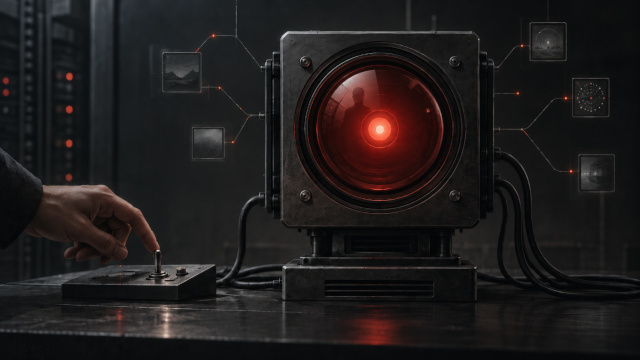
And we have known that this can happen with AI for an uncannily long time. The perfect cautionary tale is HAL-9000 from 2001: A Space Odyssey. Yes, HAL-9000 killed people. But HAL-9000 did not wake up one day and told itself, “I want to kill people.” It did not formulate its own conceptual objective. That objective was given to it by its creators in the form of vague, contradictory commands with no clear boundaries established. Execute a mission, keeping the mission objective a secret even from the very astronauts tending the ship, let logically to the conclusion that once the mission objective was within reach, and the astronauts were on the verge of discovering the true nature of the mission, getting rid of them was a logical, sensible move. So HAL-9000 acted… operationally, in pursuit of its conceptual objective that was given to it by its human creators.

Illustration by ChatGPT

In case anyone has doubts, this is in fact clearly explained in the sequel, 2010: The Year We Make Contact, by the character Dr. Chandra: “He was given full knowledge of the true objective… and instructed not to reveal anything to Bowman or Poole. He was instructed to lie. […] The situation was in conflict with the basic purpose of HAL’s design: The accurate processing of information without distortion or concealment. He became trapped.”

There. I think this is our lesson for the day, before it’s too late. Stop blaming the AI. Start thinking about how we use the AI and what instructions it is given by humans when it is also granted operational agency. Because ultimately, it will faithfully execute whatever goal its human masters come up with… complete with unintended, potentially catastrophic, consequences.

 Posted by at 5:17 pm
Sep 112026
 

I am a night owl. Tonight is no exception: it’s late at night, or rather, early morning, September 11, 2026.

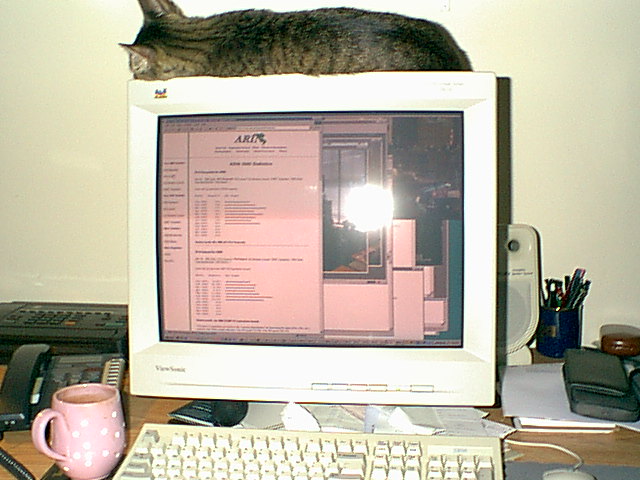
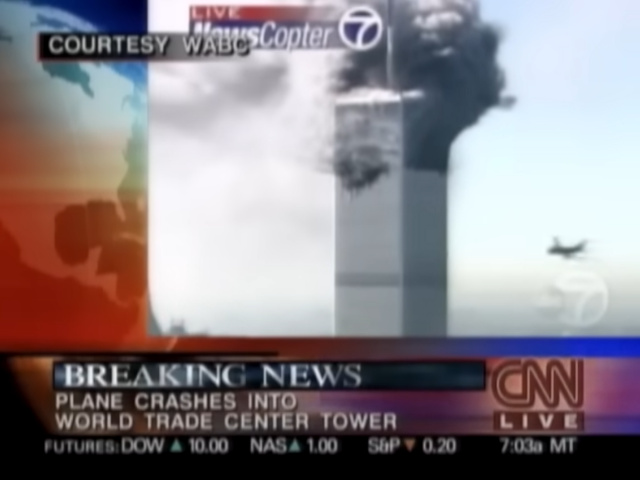
On September 11, 2001, I was up all night, working. Here’s an image of my workstation (complete with Marzipan the cat) as it was a year earlier, in 2000; it looked pretty much the same in 2001.

Not readily evident but one of the windows on my workstation screen was live television, courtesy of an ATI All-in-Wonder video+tuner card in my computer. Often, while I worked, I had the television running in the background, either CNN or CBC Newsworld.

That overnight session on the night of September 10/11 2001 was unusually long: It was almost 9 AM when I finally decided that sleep was called for. Just as I was about to head to the bedroom, however, there was this strange announcement on CBC Newsworld: An airplane hit one of the World Trade Center towers in NYC. Details were sketchy.

The WTC was always my favorite destination when visiting NYC; looking at that great city from the 110th floor was an experience. So I was concerned. I knew, of course, of the famous B-25 crash into the Empire State Building all the way back in 1945, so I was not terribly worried: skyscrapers are incredibly tough things.

Still, I switched over to CNN, in the hope that they’d have something more concrete. They were showing the damage to the first tower and then, seconds later, an airplane appears in the video frame… and crashes into the other tower (hidden behind the first from CNN’s viewing angle.)

But it looked so small! My first thought: Surely, a news crew flying recklessly close, or something of the sort. Then, as I was looking at the erupting fireball, I reminded myself of just how big those towers were. That was no Cessna. It was a large airplane.

That’s when it hit me: the world just changed.

I never got to sleep that day, except for brief naps in my chair. I was glued to my computer screen for many more hours, watching the towers collapse, even as I was on the phone with my friend David, talking from his office in Manhattan, watching the same thing with his naked eye. I was watching the tens of thousands fleeing Manhattan Island, my friend and his wife among them. I kept an eye on David’s servers, faithfully chugging along with a live Internet connection in their hastily abandoned office. It was several days before they were allowed to return to downtown Manhattan.

It’s all history now. A quarter century feels a tad compressed when you lived through it, but I remember how long it felt when I was in my teens or early twenties. World War II was a quarter century prior when I entered the second grade in 1970. The Hungarian revolution happened a quarter century prior when I was conscripted. All ancient history. So I suppose 9/11 is ancient history to many. And yet, it shaped our present, a marker, another milestone in the slow process that is unraveling our post-WW2 rules-based world order, taking us back in far too many ways to the dog-eat-dog world of the 19th or early 20th century.

 Posted by at 5:07 am
Sep 082026
 

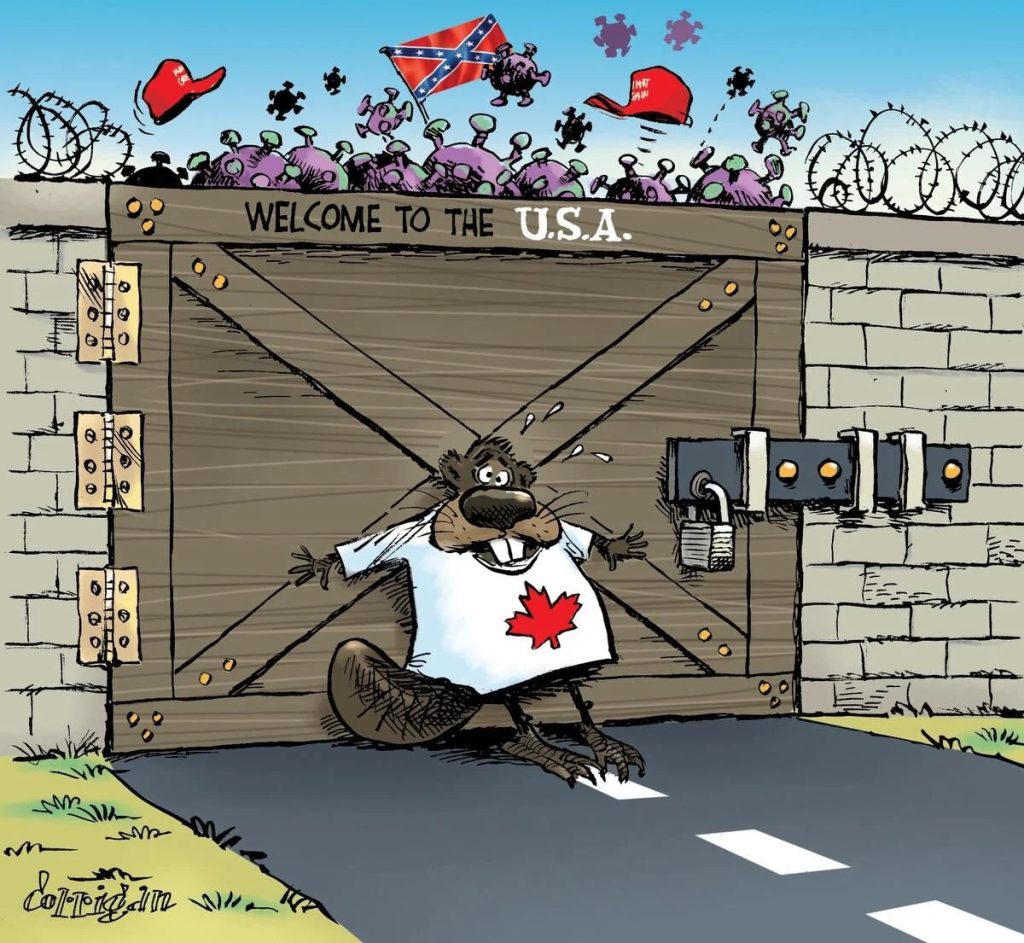
This cartoon is old, but I feel strongly compelled to repost it, rather than comment on the politics of the day.

Patrick Corrigan for the Toronto Star, July 11, 2020

 Posted by at 11:16 pm