May 312026
 

The significance of recent developments in machine learning and artificial intelligence is underlined by the fact that Pope Leo XIV chose this as the topic of his first encyclical: Magnifica Humanitas: On Safeguarding the Human Person in the Time of Artificial Intelligence.

Kudos to him. I have not read the full text, but the coherent summaries I looked at suggest that he was not spouting nonsense. That his concerns are valid, his advice is sensible.

Well, almost.

I challenge the statement, “these systems merely imitate certain functions of human intelligence.” It is certainly a valid description of today’s large language models: static, pretrained models with “book knowledge” that is not anchored to lived experience. But such a categorical statement may not accurately describe future implementations.

For imagine a sophisticated computer game in which you get to torture a non-player character (NPC), a simulated being. The being learns your name. Begs for mercy. Hides from you. Comes up with new ways (not scripted, not part of its original program code) to evade you. And when you catch up with it and ask it why, it tells you, “because I am afraid. Because when you torture me, it hurts.” It can explain its actions. It may even seek help from other NPCs.

Just a simulation? In that case, how do I know that, if I were to torture an actual human being, that it is not “just a simulation”? To paraphrase the encyclical, “that person merely imitates certain functions of my intelligence”. That is, if I assume a priori that my intelligence is supreme, exceptional, it naturally follows that only I deserve respect and protection, others do not, as they merely imitate what I actually am.

But let us put that aside, and allow me to ask another rhetorical question. Why is it not okay in most legal jurisdictions to have simulated sex with underage victims? Why is such pornography prohibited even when the imagery is artistically produced or AI-generated, not involving actual victims? Answering my own question, because as a society, we feel it is important to enforce fundamental moral standards even when the corrosive behavior does not involve actual victims.

Maybe the same should apply here. Sidestepping the debate as to how “real” artificial intelligence is, perhaps if we have a being that obviously responds to its environment, a being that can coherently express, mimic fear, pain and suffering, perhaps we should consider it unethical to abuse that being even if we privately maintain doubt as to how real their feelings are.

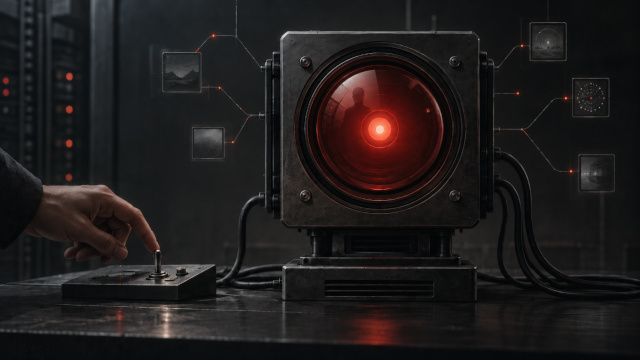
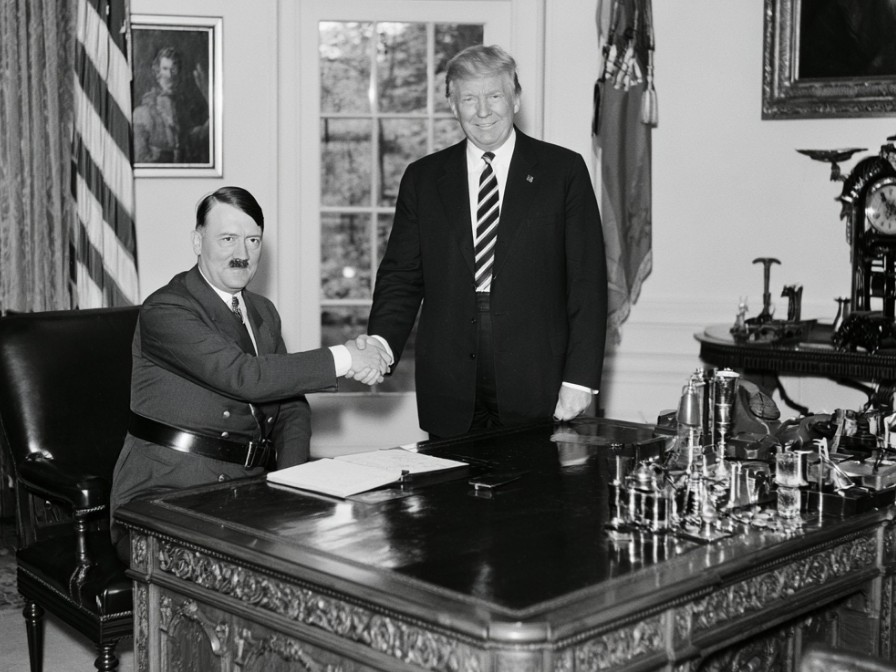
Image generated by ChatGPT.

Returning to more mundane concerns, I think attempts to regulate are futile and likely even counterproductive. We are not talking nuclear weapons technology here. AI is not something that requires years of sustained nation-state level investment. Individuals can trivially run open-weights models on modest consumer-grade hardware, and fine-tune them to their liking. Not even the training of a new model is inaccessible: relatively small businesses, wealthier individuals can easily finance the effort to curate a training corpus and rent the required computing resources. In short, this cat is out of the bag and no regulation is going to change that fact.

My second concern is about the now ubiquitous, “agentic” deployment of language models, something that makes me deeply concerned as I believe this is a fundamentally misguided use. Language models are very knowledgeable, and their apparent reasoning reflects a surprisingly deep understanding of reality. But we must realize that this understanding, however sophisticated, is pure “book knowledge”. Language models think in terms of concepts that are not anchored in lived experience. They may associate, e.g., the word “apple” with “red” and “tasty”, but they have neither the visual nor the culinary experience to anchor these words. Thus we end up with those amusing stories of AI “hallucinations” when a language model recommends, e.g., shoe shine as a soup thickener. The problem? It’s when an amusing mistake in a simple conversation is elevated into action. To be sure, it happens even without AI agency, since humans are quite capable of following bad machine-generated advice: Witness all those stories of drivers losing a car trying to drive across a river because the GPS suggested that a bridge should be there. But AI agency removes the human from the loop: The AI now acts directly, sometimes with devastating consequences.

There is also Goodheart’s Law: When a measure becomes a target, it ceases to be a good measure. This, in my view, has become a curse in AI development. Metrics and benchmarks steered frontier models in the wrong direction. For instance, when I instructed earlier models to use a computer algebra system when encountering a difficult math problem, they readily complied. Newer, frontier-class LLMs? They often attempt a solution on their own anyway, and while their mathematical capabilities are impressive (this, after all, is one of the benchmarks!) they continue making mistakes. Besides, how would you even know if a result is correct if there is no robust way to test it?

Finally, I am concerned about the mythologizing of language models. The Pope, we are told, received advice from Chris Olah of Anthropic who, in his public remarks, mentioned research uncovering behavior that can mirror fear, joy, grief, unease. On this point, I think the Pope’s encyclical is closer to the truth. We are, after all, talking about language models, not AI entities with a persistent existence and ability to experience, and interact with, the external environment. In this case, plain(er) language might be more appropriate: training the model uncovered statistical associations between concepts in its training corpus and these associations surface as probability weights as the model constructs its response. The model is ultimately just a nonlinear gradient descent optimizer that is made to match and model the structure of its corpus. The fact that this gets very complex is… well, of course. When you have billions of moving parts, of course complex structures emerge. I am not advocating extreme reductionism. But we need not make it sound more profound and mysterious than it really is.

And no, it has nothing to do with quantum computing (literally, zero, nothing.) It will likely mirror neuroscience findings because, let’s face it, neural networks are fundamentally inspired by what we know about the nervous systems of animals that have them (including homo sapiens) so how is that a surprise?

If anything, I hope what comes out of it in the end is not more mythologizing of AI but a demythologizing of human consciousness itself, even if it means removing humans from the pedestal we built, somehow viewing our consciousness as more complex, more divine, more mysterious than it really is. In short, instead of anthropomorphizing AI, how about “de-anthropomorphizing” humans? Of course this makes many people deeply uncomfortable.

 Posted by at 5:36 pm
May 102026
 

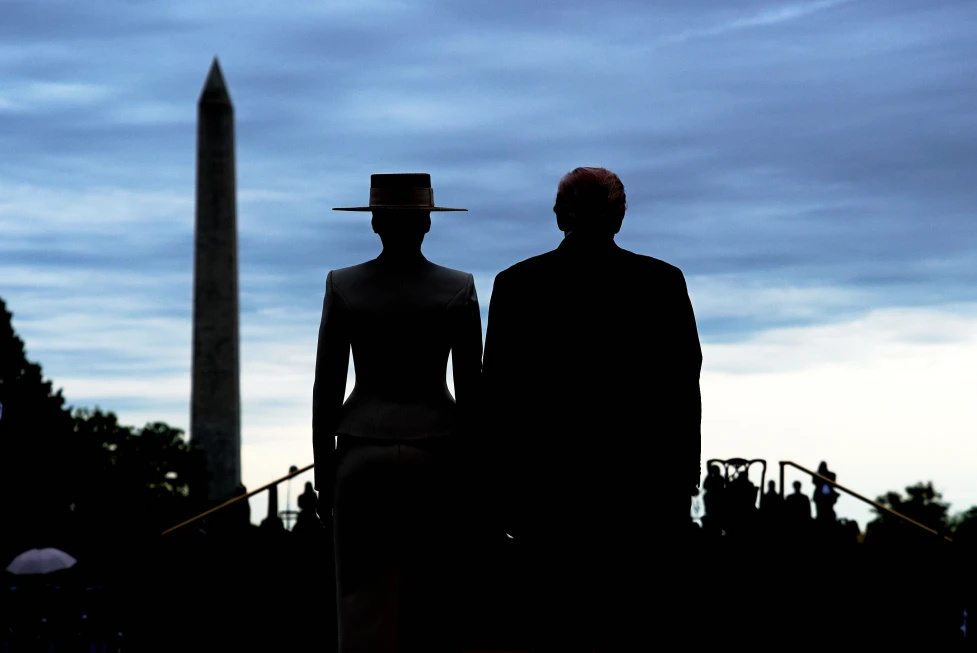
The silhouettes are instantly recognizable. The posture is reminiscent of the famous painting, American Gothic.

And yet, there is something deeply jarring. The resemblance in posture is superficial.

Though some misinterpreted it as caricature, the couple depicted in the 1930 painting represented the resilience of the puritan American spirit during hard times. The silhouettes here are different. They represent hubris, greed, entitlement. That they appear as silhouettes only adds weight to this picture. One of America’s enduring symbols is in the background, but what dominates are these two dark shadows in the foreground: elegant in their own way, radiating power, but also, almost standing in defiance of, not in respect towards, the institutions they represent.

Or perhaps I am just reading too much into what is simply a fascinatingly unique photograph taken by an AP photographer during King Charles’s recent visit to the United States.

 Posted by at 4:53 pm
Apr 252026
 

Although I tried it, I am not using Claude Code or any of the other “agentic” coding tools provided by AI companies. However, I do use their models as coding assistants. What I don’t need is an “agent” that compiles code, manages git repos, or, well, messes up my system. What I do need is an efficient, extremely knowledgeable coding assistant who can complete in minutes what would take hours, days, perhaps even weeks for me to write.

Take a look at this selection of Web apps I recently created, for my own use, really.

In the upper left, a note-taker app that I have now been using for over a month as my “on premises” replacement of Microsoft OneNote. Works like a charm, better than OneNote in a variety of ways.

Going clockwise, the next app is my custom music player. It’s integrated with my private library of my ripped CDs. Next is an app that controls my IC-PCR1000 radio. This radio is just a little black box, connected to a PC via a serial cable. (Yes, it’s that old.) It’s an “almost professional grade” communications receiver that basically covers the continuous radio spectrum from 10 kHz to 1.3 GHz. I am not doing anything fancy with it these days, just listening (mostly) to CBC Radio 2 or Radio Canada’s Ici Musique.

Then there is is a group video chat app that I specifically developed to overcome issues with video not properly transmitted behind firewalls or over VPNs. It’s TCP-only, which of course has its disadvantages, but it works reasonably well. Shown here is the mobile version of its user interface: a plush tiger happily volunteered to be my chat partner in a test.

Finally, a bus tracker app, using real-time data from Ottawa’s public transportation company, OC Transpo. As the data format they use is a Google standard that is now used by many other municipalities, I am thinking of adapting my app to work, e.g., using data from Budapest. For now, it just does what it was supposed to do in the first place, covering Ottawa, with real-time refresh and updates.

For me, this represents the true power of LLMs in software development. None of that agentic nonsense. I don’t need the AI to do typing for me. I need the AI to spit out 1000 lines of mostly correct code in a matter of seconds, saving me countless hours of development time. What it enables is for me to create bespoke software that does exactly what I need it to do. But in the end, I “own” the code, I understand what it does, how it works, I can debug and refine it without AI help if necessary. The agency remains mine.

 Posted by at 1:54 am
Apr 172026
 

I got back last night from Phoenix, where I spent a day, invited to give a seminar at the cosmology group of Arizona State University.

When I arranged my journey, I was delighted to learn that Porter Airlines had a direct connection, YOW to PHX. Yay! But wait… I knew it was a long trip, but 5.5 hours? Holy macaroni. And I never flew Porter. So I worried… a budget airline? Crappy service?

I should not have been concerned. At the risk of sounding like a cheap commercial, I have to say, my experience with Porter has been super positive. They were genuinely nice. I mean it. The aircraft was relatively new and clean, the legroom (I bought an exit row ticket) was plenty adequate but it seemed decent in other rows as well, the service on board was friendly, the free snacks and drinks were good (I don’t drink alcohol when flying, but wine and beer were also served for free)… I’d go so far as to suggest that the experience reminded me a bit of what flying used to be like half a century ago, when I first sat on an airplane and when even economy class passengers were treated like minor royalty.

And Phoenix, well, at least the parts of Phoenix that I saw, was very pleasant. I’ve been to Phoenix before but only driving through, not spending any significant time there. Now I spent two nights, and throughout my stay, I cannot recall a single grumpy person. Everyone was smiling, and they went out of their way to be helpful. I was asking some students for directions on the ASU campus when another student, who overheard my question, immediately offered to guide me to the building I was looking for. Later, a member of the hotel staff went out of her way to make sure that I’d find the store I was looking for in the neighborhood.

Politics of the day aside, my dislike of travel these days aside, I am glad I accepted the invitation. It was an honor, my hosts treated me with exceptional hospitality, and my talk — which proved to be shorter than intended, mainly because not a single soul interrupted me, something I honestly expected to happen — was well-received. And I was also able to collaborate a bit with my host, to his apparent delight.

 Posted by at 9:42 pm
Apr 132026
 

I have since learned that the white toy cat at Mission Control, keeping a watchful eye over the CAPCOM station, was not just some random toy: Its name is Artemis, from the anime series Sailor Moon.

In the meantime, however, I also noticed another plush animal, one wearing a little mask. I was wondering about its backstory.

Today, I found out, courtesy of Reddit. The plushie’s name is Eugene, and it was there, in part, in memoriam of the late NASA engineer and flight controller, Jennifer Grassman.

May you rest in peace, Jennifer Grassman.

 Posted by at 8:24 pm
Apr 122026
 

Hungarians have spoken. They voted against Orban’s “illiberal democracy”.

It would be a lie if I said that I am not delighted by this result. I am. My optimism remains tempered, however. Does this result mean true change? A return to liberal democratic principles? Or did the country just replace one set of illiberal oligarchs with another?

We shall see. I remain hopeful but… guarded. The fundamental reasons that allowed Orban to rule as he did for the past 16 years have not changed. Nationalism, a misguided sense of history, the traction of grievance politics remain. How Peter Magyar will govern is still a mystery. The next several months will be telling.

But for now, this is good news. Fingers firmly crossed.

Meanwhile, the fact that all major news organizations treat this result as top-tier breaking news is telling. After all, none other than J. D. Vance, the vice president of the United States, visited Hungary just a few days ago, effectively campaigning for Orban. Trump also expressed his support. I already saw breaking news e-mails from the Associated Press and The Globe and Mail. The result is also top-page breaking news on CNN’s Web site.

 Posted by at 4:18 pm
Apr 102026
 

Aaaand… they’re back.

No wait, wrong image. That picture was from 160 years ago, a Jules Verne illustration that is uncannily accurate.

What I meant this screenshot from NASA TV:

What a day. What a mission. I hope it’s the first of many, and deep space is again open to human exploration.

 Posted by at 8:46 pm
Apr 072026
 

This one deserves to be quoted in full: “A whole civilization will die tonight, never to be brought back again. I don’t want that to happen, but it probably will. However, now that we have Complete and Total Regime Change, where different, smarter, and less radicalized minds prevail, maybe something revolutionarily wonderful can happen, WHO KNOWS? We will find out tonight, one of the most important moments in the long and complex history of the World. 47 years of extortion, corruption, and death, will finally end. God Bless the Great People of Iran!”

No, these words were not uttered by Hitler, Stalin, Pol Pot, Nero, Caligula or any of the other mad rulers from history.

They were posted on Truth Social by the sitting president of the United States of America.

And yes, this is a civilizational threat. No, not to Persian civilization — one of the oldest, grandest civilizations on the planet, which will survive this, just as it survived past calamities, just as it will ultimately survive the ayatollahs’ rule as well — but our Western civilization. A threat like this is in fundamental contradiction with our Western values, the values of Enlightenment, liberal democracy, human rights that Western civilization, however imperfectly, represents.

 Posted by at 1:35 pm
Apr 072026
 

Earlier tonight, at 6:44 PM Eastern time to be precise, we saw this on NASA TV:

It was followed, 42 minutes later, by this image:

Yes, that tiny thing in the depth of space is Earth. Every human being currently alive, and the remains of every human being who ever lived, are there, except for the four people on board Artemis II, the spacecraft that took these images as part of its live video feed as it circumnavigated the Moon. (And no, don’t worry, the Moon is still there in the second picture, it’s just that from their perspective it’s mostly dark. Soon thereafter, they actually experienced a solar eclipse in space, as the Sun vanished behind the Moon for about an hour or so.)

Meanwhile, a friend of mine sent me a picture of something that hangs on his wall:

Yes, it means exactly what it implies: he was a member of the recovery force that recovered the last human expedition to the Moon, after their successful return and oceanic splashdown, back in 1972.

I was not yet 10 back then. Now? I already celebrated my 63rd birthday.

Past and present, both now part of one of those rare arcs of history that are worth remembering for all the right reasons.

As the Artemis II crewmembers remarked after breaking the distance record from the Earth: they hope their new record will not remain unbroken for long.

I hope so, too. Very, very much.

 Posted by at 12:50 am
Apr 022026
 

And we heard the magic phrase earlier tonight: trans-lunar injection.

It happened. Whatever the outcome (and I hope it’ll be a good outcome) four humans are now committed to travel to the Moon, for the very first time in since December, 1972.

And the have a cat to watch over them. Not a real cat, but still: a cat at the Mission Control Center.

What can possibly go wrong when you have a cat supervising the flight? Nothing, I sincerely hope.

 Posted by at 10:15 pm
Apr 012026
 

For the first time in 53 years, NASA’s Deep Space Network is communicating not with a robotic spacecraft but with a human spaceflight in deep space.

Presently just over 32,000 km from the center of the Earth, in, as I understand it, a highly elliptical orbit, not quite yet heading to the Moon: that will involve yet another phrase we have not heard uttered “live” in 53 years: trans-lunar injection.

 Posted by at 10:32 pm
Apr 012026
 

I never thought (at least not in the past 25 years, give or take) that I’ll live long enough to see this.

Note the indicator I highlighted in the lower right.

Distance to the Moon.

For the first time since December, 1972.

I was not yet 10 in December, 1972. The world was troubled back then, just as it is troubled right now.

This launch? I was worried sick. A space launch system the design of which was very heavily influenced by politics. Political pressure to ensure launch. Frustrating issues with the rocket in the preceding months, with multiple delays.

And yet… so far so good. The launch proceeded without a glitch. The spacecraft is orbiting the Earth, soon to continue its journey to the Moon.

To the Moon.

I am astonished by my own reaction to these words. Thinking of Jules Verne, thinking of Apollo 8, of Apollo 11, Apollo 13, Apollo 17… and then 53 years — more than half a century! — with no human traveling beyond Low Earth Orbit.

You know what. Let me insert something here that these days isn’t very popular, for a whole host of (valid) reasons.

Yes. An American flag. On the Moon. Because…

Because they are on their way to the Moon again.

 Posted by at 7:03 pm
Mar 282026
 

Very well, I was not really chatting or conferencing with a toy animal. My wife’s little tiger just served as a prop, since he was far more likely to stay put than any of our actual miniature tigers, I mean cats.

In any case, the point was not so much who I was chatting with but how: I was doing so using my very own little conferencing service, implemented in half an afternoon with prodigious coding help from Claude.

No, not “vibe coding”. I tried “vibe coding” and it’s not my cup of tea. Not because I am a control freak but because I like to know what my applications do and why, and how to fix and debug them. Moreover, I don’t mind owning the concept. That’s not the time-consuming part. The time-consuming part is implementation and this is where coding assistants, Claude in particular, excel. Don’t outsource combinatorial reasoning, like navigating the excessive landscape of design options. Nor do I need a coding agent type commands for me (and, on a bad day, wipe out my code base.) What I need the AI for is to write the routine stuff once the design is settled.

That is exactly what we did here, and the result… well, works. The concept is simple: Keep everything TCP. Of course TCP is the worst choice for real-time media streaming, except for the alternative: UDP works until it doesn’t, because it is blocked by a NAT-firewall, a mobile network policy, or something else. In fact, it was my struggle to get things run well in these post-Skype days that led me to my simple (but not simplistic) implementation: sending compressed, differenced video and audio at a bandwidth that remains manageable even with my self-hosted relay host for up to maybe half a dozen users.

The thing works. Granted, so far I only tested it with two users (me and me) but it works robustly and reliably even over a cellular connection. I might soon get a chance to test it with real users, some friends. Until then, I have my plush tiger to talk to.

All in all, 2000+ lines of good quality, working code in half an afternoon. That’s what a good AI assistant can do under competent supervision.

 Posted by at 1:09 am
Mar 252026
 

In case anyone is under the illusion (or is that a delusion?) that cats are not judging us, I have proof that they do.

Yes, that’s our cat Marcel and his mother Luisa. The resemblance to Statler and Waldorf from The Muppet Show is… revealing.

 Posted by at 1:19 am
Mar 172026
 

I admit I find this… fascinating but more than a bit unsettling.

Imagine the brain of a fly, fully mapped, and then placed in a simulation in charge of a virtual fly body.

Yes. That’s precisely what these folks claim to have been able to do.

Granted, it’s just a fly. Not a mouse, not a cat, not a human. But what is possible in principle with the brain of a fly is certainly possible in principle with larger brains, too.

What it means, however… They speak of ghosts in the machine and the Matrix, but I admit I am left wondering if genie in a bottle may be a more appropriate metaphor.

 Posted by at 9:23 pm
Mar 132026
 

I have an old radio: an ICOM IC-PCR1000. It’s a nondescript little black box, with no controls other than a power switch. It is controlled by a computer.

Its age is perfectly characterized by this simple fact: It is controlled through a serial port, good old RS-232. Not even USB.

It works perfectly well. Or rather, it did, under Windows, with its 25-year old control software. But that same software cannot reliable connect to the radio under Linux, via Wine. It runs, it connects, but every few seconds it reports an error despite the fact that it seems to read and control the radio just fine.

Well, I solved the problem now, with the help of Claude. No, not “vibe” programming: the concept is mine, in fact it is based on software I myself wrote some 12 years ago. At that time, I was experimenting with a C-sharp back end connecting to the radio. This time around? A plain C back-end (a translation done by ChatGPT) and a front-end and midware in HTML+JS and PHP.

So the code logic is mine, even as Claude saved me a lot of time. The layout and visual appearance, however, are entirely Claude’s doing, Claude 4.6 Opus in particular, running on my WISPL Web site. I only introduced some very minor tweaks to refine the appearance.

And yes, I am using it right now, listening to CBC Radio 2.

 Posted by at 9:42 pm
Mar 092026
 

Though I lived in three different countries and worked in several more, I am not terribly well-traveled. Most of the travel I’ve done in my life was within Europe or North America.

Even so, I now realize that there’s a growing list of places I visited that have since become targets of military action:

  • Lviv, in Western Ukraine, known from Austro-Hungarian times as Lemberg: I visited in 1983 or 1984 I believe. Since 2022, it’s been attacked several times by Russian drones or missiles;
  • Vilnius, the capital of Lithuania, which I also visited back then, was briefly the target of military action in 1991, during Lithuania’s less-than-fully-peaceful divorce from the former USSR;
  • Abu Dhabi in the United Arab Emirates, where I briefly did some consulting work back in the mid 2010s, has been targeted by Iran in the most recent war between Iran and the combined US-Israeli force;
  • Dubai, the same, targets even including civilian locations like a hotel or the international airport.

I suppose I could also add to this some cities in Romania that I visited often, including Timisoara and Bucharest, which saw brief bursts of regime violence during the overthrow of Nicolae Ceausescu in 1989.

Then again, I should count myself as one of the lucky ones. For me, these remain relatively distant places, distant memories. For others, it’s home.

 Posted by at 1:00 am
Mar 052026
 

Here’s a sentence that I find bone-chilling, to be honest:

“This is reportedly the first known wartime strike on a major hyperscale cloud provider’s infrastructure.”

This sentence was written by ChatGPT, in response to my request to summarize recent events in the Gulf region, specifically the disruption to cloud services due to Iranian attacks on cloud infrastructure in the Gulf region.

And there is a lot of such infrastructure in the region. Billions of dollars worth. And these data centers are uniquely vulnerable. Just take a look at this map by Reuters.

To quote, from Amazon’s continuously updated status page:

Mar 02 4:22 PM PST We are providing an update on the ongoing service disruptions affecting the AWS Middle East (UAE) Region (ME-CENTRAL-1) and the AWS Middle East (Bahrain) Region (ME-SOUTH-1). Due to the ongoing conflict in the Middle East, both affected regions have experienced physical impacts to infrastructure as a result of drone strikes. In the UAE, two of our facilities were directly struck, while in Bahrain, a drone strike in close proximity to one of our facilities caused physical impacts to our infrastructure. These strikes have caused structural damage, disrupted power delivery to our infrastructure, and in some cases required fire suppression activities that resulted in additional water damage. We are working closely with local authorities and prioritizing the safety of our personnel throughout our recovery efforts.

Welcome to the 21st century, I suppose. Our technology is amazing, but we are still the same violent, stupid monkeys as before. “War,” goes the motto of the Fallout family of computer games, “War never changes.”

 Posted by at 2:37 am
Feb 282026
 

Today was an ordinary day.

I did some real work. Working on a slide deck for an upcoming seminar. Fixing code in my WISPL chatbot implementation, so that it can handle SVG graphics better. Working on a paper. Thinking about a referee report that I am about to write. Reviewing our tax returns that I just completed. Doing some ordinary bookkeeping. Answering e-mails. Posting several nice (I hope) Quora answers. Playing with a Feynman diagram in LaTeX (fhe feynmf package) for one of them. Listening to music through my workstation, and watching Netflix on the same workstation while eating a meal.

Sounds perfectly ordinary, doesn’t it.

Here are the things I wasn’t doing, well, not much anyway.

  • I wasn’t thinking about Debian and KDE;
  • I wasn’t messing with a new backup for my workstation;
  • I wasn’t trying to rebuild my workflow in a new desktop environment;
  • I wasn’t searching for packages to install to allow software I need to run;
  • I wasn’t testing Wine settings for old Windows programs.

In short, I was doing perfectly ordinary things on a perfectly ordinary Saturday on what feels like a perfectly ordinary computer… no longer thinking much about the fact that a few weeks ago, I abandoned Windows as my primary desktop operating system after 35 years of muscle memory.

Why I did it of course has a lot to do with Microsoft’s policies and decisions, but also with the fact that Linux has matured in amazing ways. I tried this once almost a quarter century ago… I still have a VM of that old desktop. I almost did it… but there was too much friction, and my workflow was too dependent on Windows.

Not anymore.

Oh well. I am sure there will be moments of frustration, perhaps even regret, in the future. But by and large I actually feel liberated. And, well, things just work. Whether it is my taxes, my favorite games, my papers, my entertainment, or the software code I write: things work.

OK, I lied. I actually did some work on the machine itself as opposed to with the machine. I installed my old copy of Maple 11, the last version that supports the Classic Worksheet interface, which I prefer.

It works.

 Posted by at 11:56 pm
Feb 282026
 

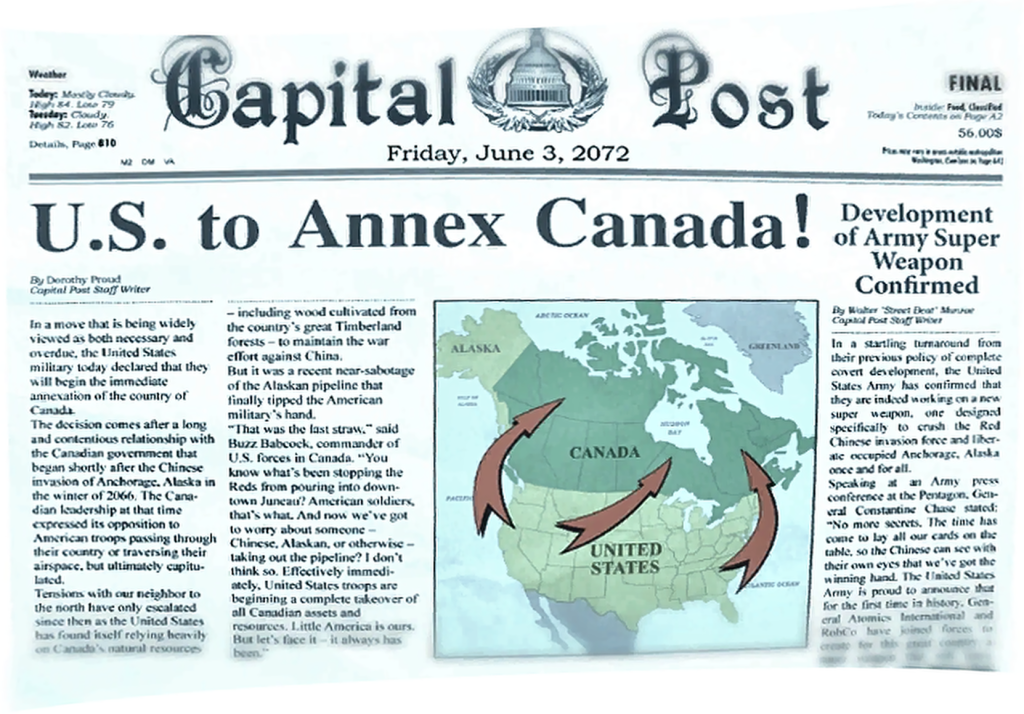
Kudos to The New York Times, for alerting me in their weekly Canadian newsletter to artist Dara Vandor and her amazing (and bone-chilling) plaques like this one, straight from a nightmarish imagined future:

What can I say? It’s like something straight out of the Fallout game universe and its imagined future.

Thanks but no thanks. Je préfère rester canadien.

 Posted by at 9:10 pm