I first read this novel, The Prometheus Crisis, by Thomas N. Scortia and Frank M. Robinson (known also for the book, The Glass Inferno, which was one of the novels on which the 1974 disaster flick The Towering Inferno was based), in the late 1970s. Originally published in 1975 in the United States, it was eventually translated into Hungarian and published there. I still recall vividly that I could not put the book down: I spent most of the night reading it, and as a result, I was rather sleepy throughout the next day.
The novel tells the story of a nuclear disaster at a fictitious California nuclear power plant near Los Angeles. It follows several protagonists, including the plant manager, townspeople and others as they struggle (and sometimes fail) to survive.
Recently, I managed to grab a copy of the original paperback and I read it again. I was, I must say, rather taken aback by how fresh the book still felt, despite being half a century old. More importantly, how closely the fictitious events of the meltdown and environmental consequences matched the reality of Chernobyl, which took place just over a decade after The Prometheus Crisis was published.
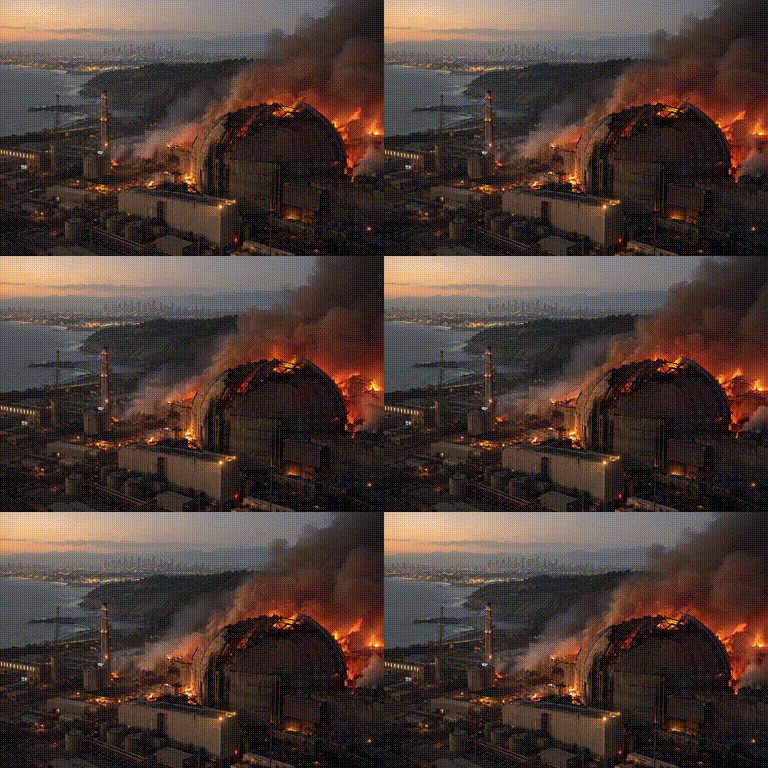
And no, I don’t mean the technical details, though they are impressive. No, what I mean is the initial response to the disaster, botched evacuations, and above all, the political cover-up, the lies, all the plausible deniability. In fact, if anything, the ficititious anti-heroes of the novel are worse than the Soviet-era apparatchiks who were responsible for initial the lies, news blackouts and delayed evacuation following the meltdown of reactor 4 at the Chernobyl NPP. The evacuations depicted by the novel are also far less humane than what actual eyewitness accounts tell us from Pripyat and Chernobyl.
The authors explain that their unflattering view of the political response was based in no small part on what America witnessed in the wake of Watergate and ultimately, Nixon’s resignation. Those were indeed strange times, though I admit that those events look surprisingly tame from the perspective of 2026.
Either way, the novel is still good. Too bad it was never turned into a movie; it’d have made one heck of a disaster flick.