Dec 092025
 

It happened in 1959, at the height of the Cold War, during the early years of the Space Race between the United States of America and the Soviet Union.

An accident in rural Oklahoma, near the town of Winganon.

Rex Brown/CC BY-ND 2.0

But… don’t be fooled by appearances. This thing is not what it looks like.

That is to say, it is not a discarded space capsule, some early NASA relic.

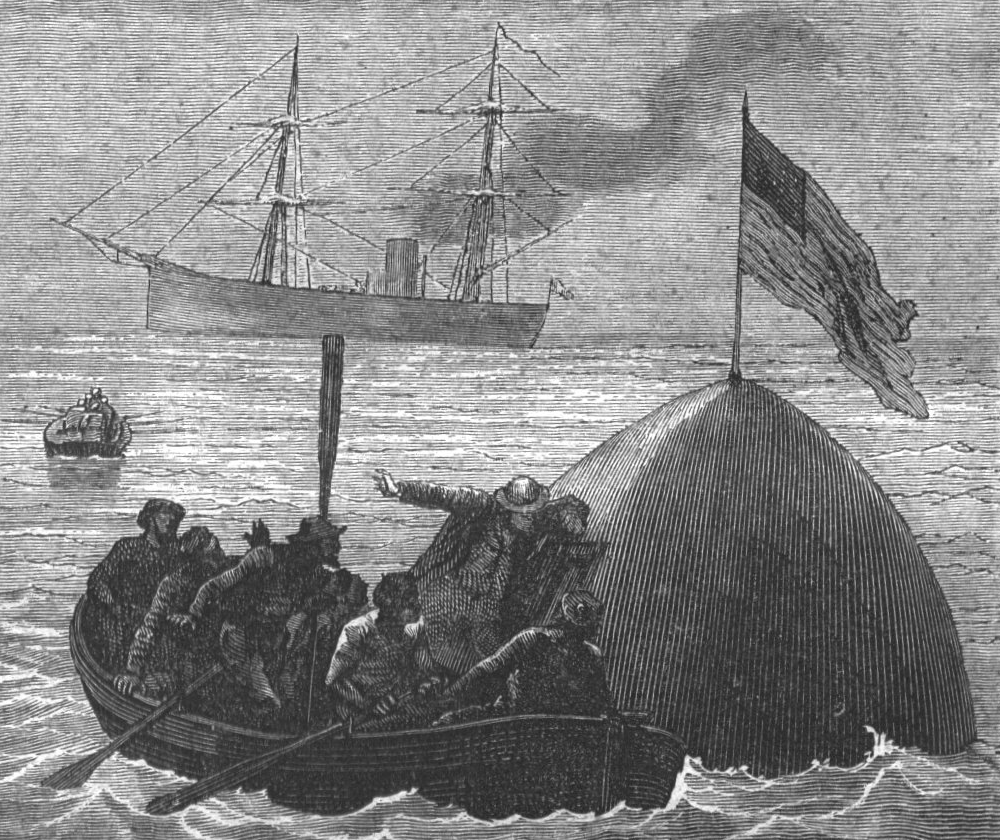
What is it, then? Why, it is the container of a cement mixer that had an accident at this spot. Cement, of course, has the nasty tendency to solidify rapidly if it is not mixed, and we quickly end up with a block that weighs several tons and… well, it’s completely useless.

There were, I understand, plans to bury the thing but it never happened.

But then, in 2011, local artists had an idea and transformed the thing into something else. Painting it with a NASA logo, an American flag, and adding decorations, they made it appear like a discarded space capsule.

And I already know that if it ever happens again that I take another cross-country drive in America to visit the West Coast, and my route goes anywhere near the place, I will absolutely, definitely, visit it. Just as I visited the TARDIS of Doctor Who 12 years ago when I was spending a few lovely days in the fine city of London.

 Posted by at 3:34 am
Nov 222025
 

Earlier this morning, still in bed, I was thinking about how electricity entered people’s lives in the past century or so.

My wife and I personally knew older people who spent their childhood in a world without electricity.

  • When electricity finally arrived, it was at first in the form of electric lights.
  • Not much later, simple machines appeared. Maybe a vacuum cleaner. Maybe a coffee grinder. Something with a simple electric motor and some trivial mechanical construction.
  • Next came the radio. Suddenly, electricity introduced a whole new dimension: you were never alone anymore. If you had a radio set and a power source, you could listen to the world.
  • Then there were refrigerators, revolutionizing kitchens. Leftovers were no longer waste or slop for farm animals: they could be consumed a day or two later, kept fresh in the fridge.
  • Not long after, another miracle began to pop up in homes: television sets.
  • Sometime along the way, electric stoves, ventilators, and ultimately, air conditioning also appeared in many homes.

One could almost construct a timeline along these lines. This is what was on my mind earlier in the morning as I was waking up.

And then, a few hours later, a post showed up in my feed on Facebook, courtesy of the City of Ottawa Archives, accompanied by an image of some exhibition grounds celebrating World Television Day back in 1955.

It’s almost as though Facebook read my mind.

No, I do not believe that they did (otherwise I’d be busy constructing my first official tinfoil hat) but it is still an uncanny coincidence. I could not have possibly come up with a better illustration to accompany my morning thoughts on this subject.

 Posted by at 10:16 pm
Aug 312025
 

So here we have it, ladies and gentlemen, the leader of the free world, president of the most esteemed Republic, the “shining city on the hill,” proclaiming to the world that he was right about everything even as he is busy implementing a policy of autarky, using tariffs and other measures in an attempt to lure industries back to the United States:

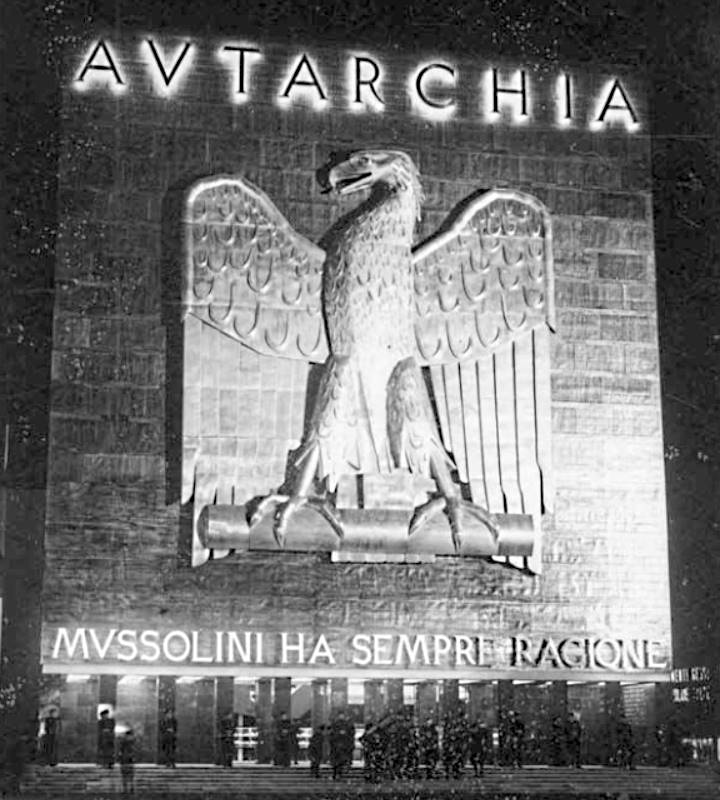
Unfortunately the idea is not original. Here’s another version from the not too distant past, just 87 years ago:

The occasion was a celebratory Autarchic exhibition of Italian ore. The Italian text reads, in English, “Mussolini is always right”.

We know how that story ended. We also know that repeating history’s mistakes is one of the stupidest things we can do. Nonetheless, we keep doing it over and over again…

 Posted by at 2:29 pm
Aug 302025
 

The other day, I came across a tragic photograph accompanying a story from the horrifying winter of 1944-45 in Budapest, when the Arrow Cross ruled the streets and their units murdered Jews by the thousands, often lining them up and shooting them into the icy Danube. The victims were first ordered to remove their shoes: leather was valuable! (Today, their fate is memorialized by a row of bronze shoes marking one of the locations where these murders took place.)

The story was about a mother, already barefoot in the snow, who managed to convince her son to run. Supposedly, the son survived (I cannot vouch for the authenticity of the story but there were harrowing stories of survival during the Arrow Cross’s deranged murder spree.) Accompanying the post was an old black-and-white photograph showing the moment this supposedly happened. Except that it wasn’t an old black-and-white photograph. It was an image generated by Google’s AI.

And today, I came across another old photograph, also from 1945: This one depicting a group of schoolgirls, taking a swim in a creek even as the mushroom cloud of the Trinity nuclear test rises behind them in the background. The story is real: out of the group of 12, only two lived long enough to celebrate their 40th birthdays. But the photograph is a fake. Trinity took place in the dark, at 5:30 AM. The campers were too far away (50 miles) to see the mushroom cloud. They were exposed to radiation hours later, due to fallout.

Granted, I use AI-generated imagery, too, even in a post that is about sniffing out AI-generated imagery. But there is a crucial difference: I am pretty certain no one believes that my images depict reality. They are intended to illustrate, even if whimsically, not to deceive.

What if the deception is in the service of a good cause, as in the two examples above? Doesn’t really matter, unfortunately. By blurring the line between reality and fiction, we are making it that much easier for fraudsters and crooks, for propagandists and ideologues alike to deceive us with impunity, in the service of their own nefarious agendas.

 Posted by at 10:18 pm
Aug 092025
 

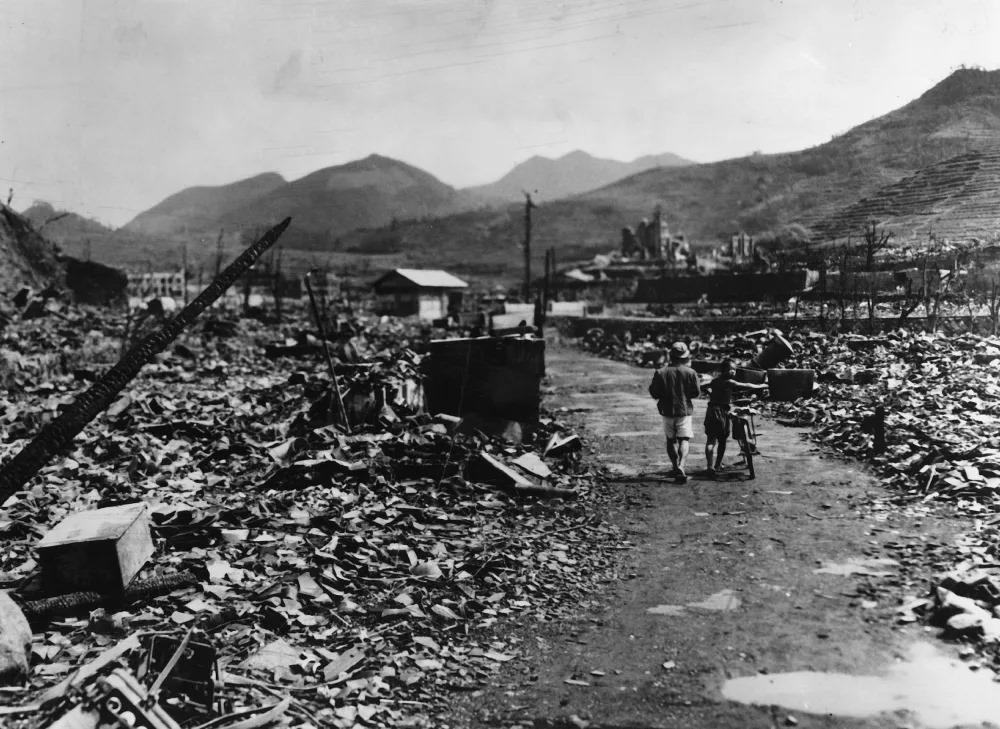
This was the city of Nagasaki 80 years ago today, on August 9, 1945.

No atomic bomb has been used in anger ever since.

One can only hope that we will be able to say the same thing 80 years from today. I am not holding my breath.

 Posted by at 9:33 pm
Aug 042025
 

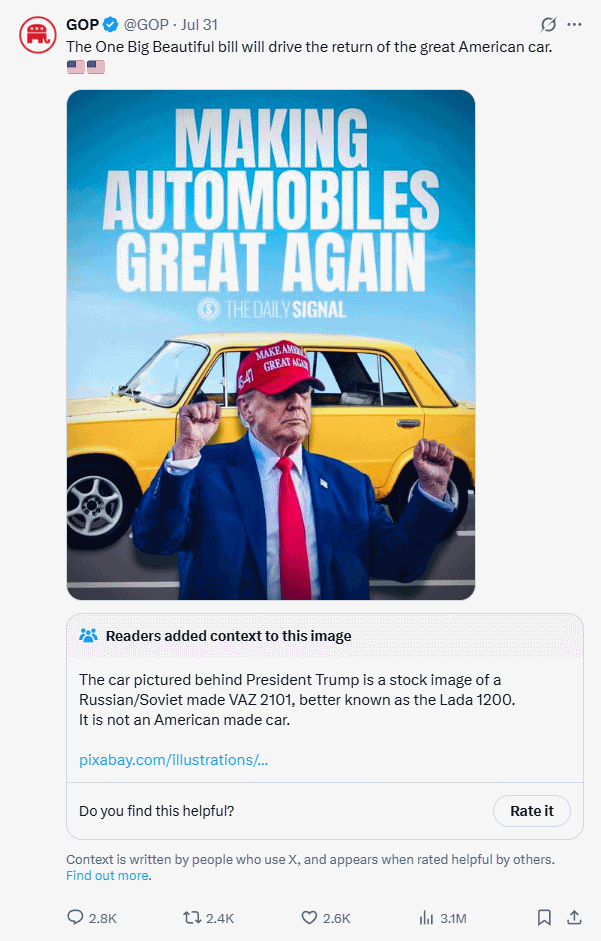
When I first came across this post, in the form of a screen shot on Quora, I was incredulous. Surely, I thought, it cannot be real? Posted by @GOP — a long-established (2007) account with 3.4 million followers representing, it appears, the Republican National Committee. But it is. I went and checked myself, and found the post on X/Twitter.

Yes, ladies and gentlemen. The Republican National Committee (or at least those in charge of its social media) believe that the best representation of the great American car comes in the form of… the Lada VAZ-2101. Better known back then as the Zhiguli, it was the original Fiat 124 clone that the Soviet Union began to manufacture more than half a century ago in the city of Togliatti. The automobile plant there was built with Fiat’s participation in what was dubbed by some the deal of the century.

To be sure, the Zhiguli was not a bad car by 1970 standards, not by any means. It was a basic vehicle, but it was built well and drove well. With its four-stroke, 1200 cubic centimeter engine and four-speed manual transmission, it could get up to 100 mph on the open highway. Its fuel consumption (roughly 10 liters/100 km or roughly 24 mpg) was not great but hey, gasoline was cheap in 1970 and there were far worse gas guzzlers. And the car was robust enough to survive Soviet roads, so it felt like a speed demon on Hungary’s then only freeway, connecting Budapest to the resort area around Lake Balaton.

How do I know? Well, my parents had one, for starters. My father sold our Wartburg some time in 1968 or 69, and when the Zhiguli was introduced, he decided to switch rather than wait longer for another Wartburg (waiting lists for new cars were quite long in 1970 Hungary.) We got the car and fell in love with it. It was not glamorous or anything but it was a good car. It did what a car was supposed to do: it worked. Worked in the dead of winter, in the middle of summer, took you from place to place, and it was reliable. And it was even moderately comfortable.

That particular Zhiguli was still running roughly 25 years later, when I last saw it on the road during one of my visits to Hungary. It had a new owner, but back then, license plates belonged to the vehicle, not the owner, so I had no trouble identifying our old family sedan: IK-36-49.

But wait… What exactly is a Zhiguli doing in this poster? A 2025 poster, presented by the Republican National Committee no less, ostensibly about making American auto manufacturing great again?

I admit I find it somewhat incomprehensible. What is the intended message? Is it (gasp!) perhaps some subversive signal, confirming that Trump sold America out to Putin? Or is it that Trump’s regressive tariffs and budget bill will soon do to the American economy what Brezhnev’s era of stagnation did to the USSR?

The mind boggles. We live in surreal times.

 Posted by at 1:38 am
May 132025
 

I am neither the first nor the last to compare the politics of present-day America to that of the late Roman Republic and the early days of Empire.

But the Imperial Presidency did not begin with Trump. Its roots go back decades. And most recently, before Trump there was Joe Biden.

Imperial, you ask? The progressive, Democratic President?

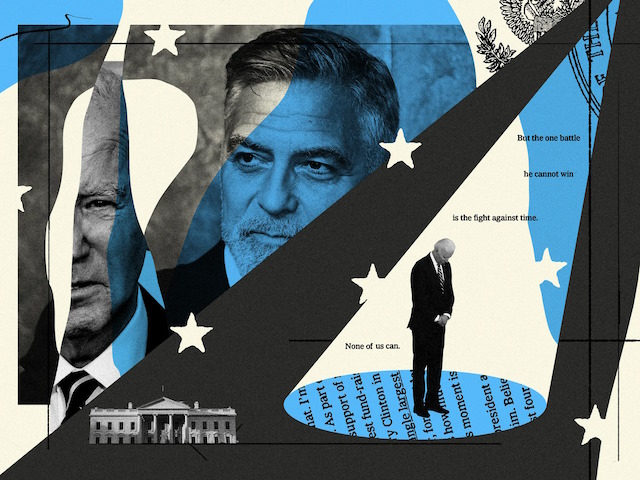
You bet. The New Yorker‘s article reveals why. Not in power grabs or grandeur, but in its insularity, the stage-managed image, and the systemic shielding of the President’s decline.

When Biden showed up in the summer of 2024 at a fundraising event hosted by George Clooney, “Clooney knew that the President had just arrived from the G-7 leaders’ summit in Apulia, Italy, that morning and might be tired, but, holy shit, he wasn’t expecting this. The President appeared severely diminished, as if he’d aged a decade since Clooney last saw him, in December, 2022. He was taking tiny steps, and an aide seemed to be guiding him by the arm. […] It seemed clear that the President had not recognized Clooney. […] ‘George Clooney,’ [an] aide clarified for the President. ‘Oh, yeah!’ Biden said. ‘Hi, George!’ Clooney was shaken to his core. The President hadn’t recognized him, a man he had known for years.”

Yet, Biden was shielded. His true condition was kept hidden even from members of his own party. Those around him — perhaps out of a sense of kindness, a sense of misguided loyalty — chose to gaslight their party, their country, the world. They even gaslighted Biden himself — encouraging him, by assuring him instead of making him face the stark truth in one of his clearer moments.

When Biden finally stepped down, it was too late. Instead of Kamala Harris, we are now dealing with a second Trump presidency.

And thus, here we are: First, a combination of Obama and Biden, resembling both the young, transformative Augustus and the same Emperor in his later years of frailty and decline, hidden by aides from the public; followed by a President resembling some of the worst Rome had to offer in the later Empire, like Caligula and Nero and Commodus combined.

To use a tired but still valid cliche: History doesn’t repeat; but it sure as hell rhymes.

 Posted by at 2:56 pm
Apr 202025
 

Almost exactly 2000 years ago, a young man was nailed to a tree for saying how great it would be to be nice to people for a change.

We still do not appear to have learned that lesson, though far too many take pride in giving it lip service.

 Posted by at 12:18 am
Apr 122025
 

British humour is older than we might think.

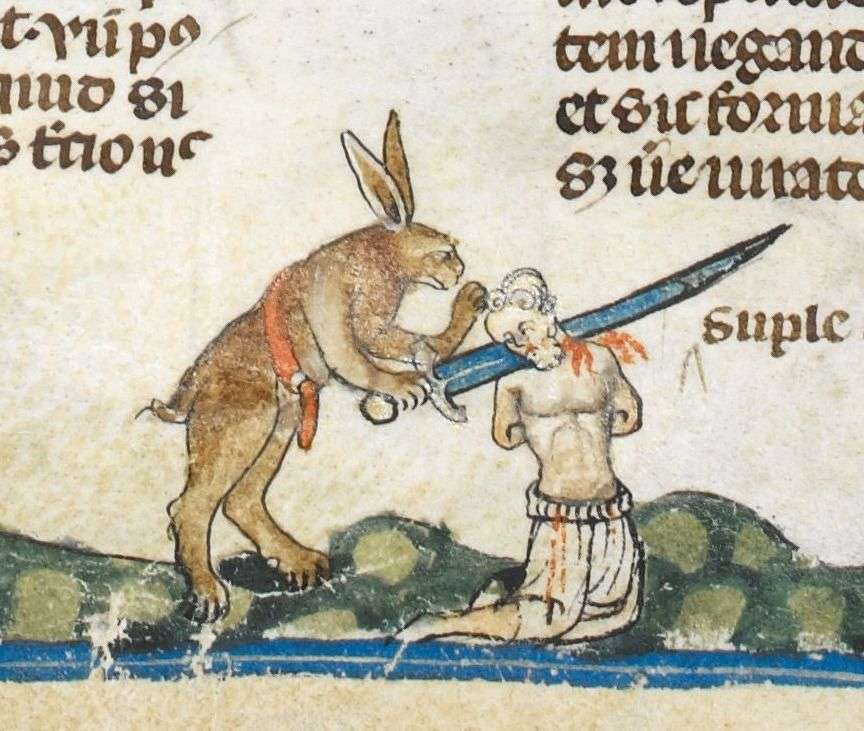
I just stumbled upon an article about the Smithfield Decretals. The damn thing is a volume of medieval Catholic canon law, a collection of decrees by Pope Gregory IX from the year 1230. In other words, medieval legalese, probably boring like hell.

But the illustrations in this particular copy are another thing altogether.

Let’s just say that I finally understand where the idea of the the killer Rabbit of Caerbannog came from, in Monty Python and the Holy Grail.

Er… Happy Easter, I think?

 Posted by at 4:01 pm
Apr 122025
 

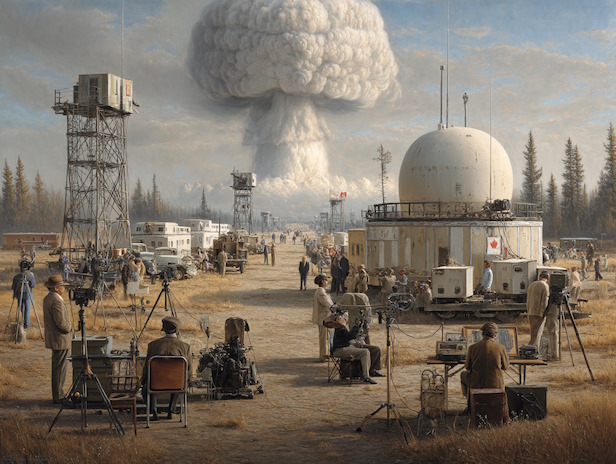
A few weeks ago, an opinion piece appeared in The Globe and Mail, advocating Canada to become a nuclear state. A follow-on article was also offered by Bloomberg, discussing the same thing.

Midjourney’s depiction of a hypothetical Canadian nuclear test.

Absurd or not, Canada is in a precarious position. It is a very large country (second only to Russia), sandwiched between Putin’s Russia and Trump’s America. It is underpopulated, but rich in much-coveted natural resources. In other words, a prime target in a future resource war.

On the other hand, Canada is also one of the original nuclear states, so to speak. Much of the research of the British “tube alloys” project took place here, research that began before the Manhattan Project. A project in which Canadian scientists played a role, and Canadian raw materials were used. Canada also has a vibrant nuclear industry. Long story short, if Canada chooses to go nuclear, it has everything required to do so, over a time scale of a few years, tops, possibly less.

Of course it would mean violating the non-proliferation treaty. And a nuclear capability also requires suitable delivery systems, such as missiles or aircraft. Even so, I think it is an investment Canada should seriously consider, before it is too late. The actual future alternatives may be far worse than Trump’s “proposal” to turn our country into the “51st state”.

 Posted by at 12:45 am
Apr 112025
 

Today was the 80th anniversary of a memorable, unique, solemn event that took place in the Pacific ocean, during the waning months of World War 2.

A kamikaze pilot attacked an American warship, the USS Missouri, during the Battle of Okinawa. The attack was ultimately not successful: the damage caused was negligible, with only minor injuries among the crew. The kamikaze pilot died.

However, the pilot’s remains were recovered. And the next day, on the captain’s orders, the pilot — believed to be a young Japanese man, Setsuo Ishino, a petty officer 2nd class in a flight training program — was buried at sea with full military honors, which even included a makeshift Japanese flag.

(U.S. National Archives photo no. 80-G-315823 via AP)

This ceremony took place despite the fact that many of the Missouri’s crew had good reasons to despise the Japanese. The captain himself lost a close relative in battle earlier in the war.

Yet… they chose to do this anyway. Why? Simple, really: because they knew it was the right thing to do. And it was this attitude by the United States of America that made the subsequent 80 years, this unprecedented (granted, imperfect, but still unprecedented) period of peace and prosperity in which we live, which is sometimes rightfully called Pax Americana, possible.

Can we have this America back, please? An America that is generous, brave, courageous, fundamentally decent? As opposed to an America that is governed by grievance, petty resentments, nativism, xenophobia, ethnocentrism, outright bigotry?

And no, I do not have any illusions about 1940s America. It was a society that, in absolute terms, was far more racist, far more bigoted than the America of today. But it was heading in the right direction, and led the way for the whole world to follow towards that famed “shining city on the hill.” A city that, it seems, is rapidly becoming a ghost town nowadays.

 Posted by at 7:44 pm
Mar 182025
 

The other day, Elon Musk’s Grok kindly drew a plot for me. After it estimated (understandably crudely, since the data are inconsistent/unreliable) the percentage of global wealth owned by the top 1%, I asked it to create an diagram for inclusion in Web pages. Well, here it is, though converted to a PNG for easier sharing:

What is the significance, you might wonder? Simple. Look at the beginning, the early 20th century. Rising inequality, resulting in well-known upheavals: a world war, revolutions everywhere, the rise of totalitarianism, another world war.

But then, inequality plummeted. Not only that, it stayed low for decades. Precisely the decades of Pax Americana, the peaceful world of the Cold War, a world with two superpowers, yet a world that was mostly defined by the rules-based, liberal democratic world order imposed by the United States of America.

It all began to unravel in the late 1990s. Since then, inequality has been rising at a rate probably faster than the rate that characterized America’s Gilded Age in the late 19th century.

We know what happened the last time the world went down that road.

 Posted by at 1:51 am
Mar 052025
 

I could not resist answering a Quora question about Trump and Ukraine: Trump wants a quick end to Russia’s war. How do you feel about his withdrawal of military aid to Ukraine, and what effect that will have on Putin’s willingness to come to the negotiating table?

For a brief moment, allow me to give Trump the benefit of the doubt and assume that he had the purest of intentions in his heart, that he was doing everything he was doing out of compassion, out of concern and a sense of responsibility, trying to end the bloodshed, the senseless war.

He won’t. There is a meme that has been very popular lately, and with good reason, recalling another instance when a similar choice was made:

British Prime Minister Neville Chamberlain returned triumphantly on September 30, 1938, from the Munich conference, where he agreed to Herr Hitler’s demands to compel Czechoslovakia to cede critical territory to Germany, and received assurances from the German chancellor that yes, this means peace in Europe. Chamberlain proudly waved the signed agreement as he was disembarking his aeroplane: “Peace for our times,” he proclaimed, cheered by many, with the notable exception of the “warmongering” Winston Churchill.

Germany attacked Poland almost exactly 11 months later, on September 1, 1939. (Chamberlain ultimately resigned the next year. Winston “not wearing a suit” Churchill became Britain’s wartime leader, a Prime Minister who guided his country through its “darkest hour” to victory — a victory made possible, in part, by unwavering help from an America that was not led by appeasers but by true leaders who fully understood the causes and consequences of Hitler’s actions.)

Those who do not remember history are doomed to repeat its mistakes.

It’s usually my blog entries that I sometimes repost on social media. This time, I felt compelled to do the opposite.

 Posted by at 8:52 pm
Feb 282025
 

A news bulletin from 1941:


Dateline:
December 22, 1941
Headline: “Roosevelt Rebukes Churchill in Surprising White House Exchange”
Subhead: President, Urged by VP Wallace, Criticizes Britain’s ‘Perpetual War Mindset’

**WASHINGTON, Dec. 22—**In a startling departure from the warm camaraderie many expected, President Franklin D. Roosevelt stunned onlookers yesterday when he sharply criticized Prime Minister Winston Churchill for what he termed Britain’s “single-minded pursuit of endless war” with Nazi Germany. The exchange occurred in full view of reporters and advisors in the White House’s East Room, overshadowing the Prime Minister’s long-anticipated holiday visit just weeks after the United States formally entered the conflict.

President Roosevelt, known for his measured tone and deft diplomacy, spoke with uncharacteristic sternness as he confronted Mr. Churchill on the question of a negotiated settlement with Adolf Hitler. “We appreciate your fight against tyranny,” he began, “but how many American resources must we ship across the Atlantic before you even consider exploring peace? Perhaps the endless request for aid should be matched by real efforts to end the bloodshed.”

Standing beside Mr. Roosevelt, Vice President Henry A. Wallace—long regarded as an idealistic and forward-thinking progressive—nodded vigorously. “Yes, Mr. Prime Minister,” Mr. Wallace interjected. “We believe in defeating fascism, but not at the cost of blindly prolonging war. If there is any path to ceasefire, we owe it to our people to pursue it without hesitation.”

Mr. Churchill, widely admired for his unwavering resolve and famed “We shall never surrender” rhetoric, appeared momentarily at a loss for words. Regaining his composure, he responded with calm precision: “A ceasefire with the likes of Herr Hitler is not truly a path to peace—it is a path to subjugation. Britain will not pause in this struggle so long as the Nazi threat looms over free nations.”

The tension in the East Room was palpable. Cabinet members and military officials looked on, many exchanging uneasy glances. Within the administration, few expected such a public admonition; Secretary of State Cordell Hull was notably tight-lipped, managing only a terse statement to the press: “The United States government is committed to a swift and just end to this war. How that goal is reached is, of course, a matter of urgent discussion.”

Meanwhile, Secretary of War Henry L. Stimson, typically in lockstep with the President, seemed visibly uncomfortable with the scolding tone. “Solidarity with our allies has never been more vital,” he told reporters in the corridor afterward. “We must stand united in the face of the Axis threat.”

Yet, there remains support in some quarters for the President’s sharp words. A portion of America’s still-influential isolationist movement hailed the call for a ceasefire as “prudent” and “sensible.” Senator Burton K. Wheeler (D-Mont.) praised what he perceived as White House caution: “If Britain will not explore every option to avoid further expansion of this conflict, we have a right to question whether our resources—and our young men—should be committed.”

Political analysts worry that Mr. Roosevelt’s broadside could sow discord at a moment when international cooperation is paramount. Even so, official accounts indicate that behind the scenes, personal rapport between the two leaders remains intact—if badly rattled. The Prime Minister is slated to spend Christmas in Washington, a visit now fraught with heightened significance. Whether President Roosevelt’s critique signals a genuine shift in war policy or merely a dramatic flourish to appease lingering isolationist sentiment remains to be seen.

For the moment, this extraordinary public dispute leaves allied unity on uncertain footing, casting a shadow over what was to be a triumphant demonstration of solidarity in a moment of global crisis.

Editor’s Note: This report is part of our continuing coverage of the first official wartime meeting between President Roosevelt and Prime Minister Churchill. For daily dispatches and analyses from our Washington bureau, follow our “Road to Victory” series in print and via radio bulletins.

This, of course, never happened. The above bulletin was composed by ChatGPT. But imagine for a moment if Roosevelt had treated Britain’s wartime Prime Minister this way. On top of it all, also scolding Churchill, calling him a dictator, for his failure to hold elections (Britain had no elections between 1935 and 1945.) Contemplate the world we’d live in if the United Kingdom was abandoned by its ally, forced to fight against Hitler’s tyranny on its own.

Because this is the future that is foreshadowed by what took place in the Oval Office today, on February 28, 2025.

 Posted by at 7:08 pm
Feb 162025
 

To all who believe that concerns about Trump’s rapid actions — from his dismantling of the US government, following the Project 2025 playbook with the help of Elon Musk to his threats to annex Canada, Greenland, or the Panama Canal or his attempt to play a much greedier, more corrupt version of Chamberlain in a peace settlement forced upon Ukraine — are not to be taken seriously, here is a cautionary tale, in the form of an editorial from the February 2, 1933 issue of Der Israelit, a leading voice of German Jewry at the time (English translation below):

Die neue Lage

Der Israelit, Heft 5, 02.02.1933

Das Kabinett Hitler, das sich am Montag Mittag in Berlin etabliert hat, bedeutet eine schwere stimmungsmäßige Belastung der ganzen deutschen Judenheit, ja, darüber hinaus, aller der Kreise, die in der Ueberspitzung des nationalistischen Rassen-Fanatismus unserer Tage ein Hemmnis auf dem Wege menschlicher Besittung und weltgeschichtlichen Fortschritts erblicken.

Zwar sind wir keineswegs der Meinung, daß Herr Hitler und seine Freunde, einmal in den Besitz der lange erstrebten Macht gelangt, nun etwa nach dem Rezept des „Angriff“ oder des „Völkischen Beobachters“ vorgehn und kurzer Hand die deutschen Juden ihrer verfassungsmäßigen Rechte entkleiden, sie in ein Rassen-Ghetto sperren oder den Raub- und Mord-Instinkten des Pöbels preisgeben werden. Das können sie nicht nur nicht, weil ihre Macht ja durch eine ganze Reihe anderer Machtfaktoren vom Reichspräsidenten bis zu den Nachbarparteien, beschränkt ist, sondern sie wollen es sicherlich auch gar nicht; denn die ganze Atmosphäre auf der Höhe einer europäischen Weltmacht, die ja mitten im Konzert der Kulturvölker stehn und bleiben will, und dazu das Bewußtsein, in der Wilhelmstraße nun der Notwendigkeit des demagogischen Werbens um den dröhnenden Beifall turbulenter Volksversammlungen bis auf weiteres überhoben zu sein, ist der ethischen Besinnung auf das bessere Selbst günstiger als die bisherige Oppositionsstellung. Den Mitkämpfern von gestern, den Parteifreunden, vermag der neue preußische Innenminister durch Erneuerung des großen Beamtenkörpers in nationalsozialistischem Sinne viel realere Dienste zu leisten als durch offene Zugeständnisse an den brutalen Judenhaß.

Trotzdem wäre es sträflicher Optimismus, sich des Ernstes der Lage nicht bewußt zu sein. Je weniger die neuen Männer dem mit Hunger und Not verzweifelt ringenden deutschen Volk durch gesetzgeberische Wunder wirkliche Hilfe zu bringen vermögen, desto näher liet für sie der Wunsch, ut aliquid feci videatur doch wenigstens ein paar Absätze aus dem rassentheoretischen Programm der Partei in die politische Wirklichkeit umzusetzen, was ohne sensationelle und kompromittierende Judengesetze auf dem Wege des „trockenen Pogroms“, der systematischen Aussperrung und Aushungerung der Juden im wirtschaftlichen und kulturellen Leben leicht geschehen kann.

Inwieweit in einem nationalsozialistischen Beamtenkörper das alte preußische Beamtenpflichtgefühl über die so lange gepflegten antisemitischen Instinkte Herr werden und Schikanen und Rechtsverkürzungen gegenüber Juden ausschließen wird, in wieweit eine Polizei, die einen Nationalsozialisten als obersten Chef über sich weiß, in jedem Einzelfall zuverlässig und unparteiisch bleiben wird, wenn es sich um Juden (oder gar um sozialistische oder kommunistische Staatsbürger) handelt – das sind Fragen und Zweifel, über deren Berechtigung nur die Zukunft entscheiden kann.

Wie die Dinge liegen, scheint es uns noch das kleinere Uebel zu sein, daß durch Tolerierung der neuen Regierung von Seiten des Zentrums die parlamentarische Basis und Kontrolle – trotz eines befristeten Ermächtigungsgesetzes – wenigstens grundsätzlich aufrechterhalten bleibt (man denke zum Beispiel nur an die Gefahren, die sonst der שחיטה drohen), als wenn ein Mißtrauensvotum des Reichstags die Auflösung mit allen ins Uferlose sich erstreckenden Aspekten aus Diktatur und Staatsnotstands-Experimenten herbeiführt.

Or, in English:

The New Situation

Der Israelit, Issue 5, 02.02.1933

The Hitler cabinet, which established itself in Berlin on Monday afternoon, represents a severe emotional burden for all German Jewry, and beyond that, for all circles that see in the exaggeration of today’s nationalist racial fanaticism an obstacle on the path of human civilization and historical progress.

To be sure, we are by no means of the opinion that Mr. Hitler and his friends, having finally attained their long-sought power, will now proceed according to the recipe of the “Angriff” or the “Völkischer Beobachter” and summarily strip German Jews of their constitutional rights, confine them to a racial ghetto, or abandon them to the predatory and murderous instincts of the mob. They not only cannot do this because their power is limited by a whole series of other power factors from the Reich President to the neighboring parties, but they certainly do not want to do it either; for the whole atmosphere at the height of a European world power, which wants to and must remain in the concert of civilized nations, and in addition, the awareness of being relieved for the time being of the necessity of demagogic wooing for the thunderous applause of turbulent mass rallies in the Wilhelmstrasse, is more conducive to ethical reflection on one’s better self than the previous opposition position. The new Prussian Minister of the Interior can render much more real services to yesterday’s fellow combatants, the party friends, by renewing the large civil service corps in a National Socialist sense than by open concessions to brutal Jew-hatred.

Nevertheless, it would be criminal optimism not to be aware of the seriousness of the situation. The less the new men are able to bring real help to the German people desperately struggling with hunger and misery through legislative miracles, the closer lies for them the desire, ut aliquid feci videatur, to at least implement a few paragraphs from the party’s racial theoretical program into political reality, which can easily happen without sensational and compromising Jewish laws by way of the “dry pogrom,” the systematic exclusion and starvation of Jews in economic and cultural life.

To what extent the old Prussian sense of official duty will prevail over the long-nurtured anti-Semitic instincts in a National Socialist civil service corps and exclude harassment and curtailment of rights against Jews, to what extent a police force that knows it has a National Socialist as its supreme chief will remain reliable and impartial in every individual case when it comes to Jews (or even socialist or communist citizens) – these are questions and doubts whose justification only the future can decide.

As things stand, it seems to us to be the lesser evil that through the toleration of the new government by the Center Party, the parliamentary basis and control – despite a time-limited enabling act – at least in principle remains intact (one need only think, for example, of the dangers that would otherwise threaten שחיטה*, than if a vote of no confidence in the Reichstag were to bring about dissolution with all its boundless aspects of dictatorship and state of emergency experiments.

*shechita, ritual slaughter

We all know what actually happened in the twelve years that followed this change in government in Berlin.

We do not yet know what is going to happen with the Western alliance, or the United States, in the coming years. But there is zero reason for optimism.

 Posted by at 4:01 pm
Feb 032025
 

How did we get here, asks the CBC rhetorically, as they recount the events that led to Trump’s announcement of across-the-board tariffs on Canadian imports to the United States.

On Nov. 5, Americans chose Donald Trump to be their next president. Twenty days later, Trump announced, via a post to his own social-media platform, that he would apply a 25 per cent tariff to all products imported into the United States from Canada and Mexico — a response, he claimed, to the fact that people and illegal drugs were entering the United States from those two countries.

At least in the case of Canada, this was an irrational justification. Seizures of fentanyl at America’s northern border represented 0.08 per cent of all fentanyl seized by American officials in the last fiscal year. The number of people entering the United States through Canada has also been a fraction of the total number of people entering via Mexico.

They also wonder if this might be a shot in the arm for Canadian patriotism. Damn right it will be and for a damn good reason:

But if American democracy continues down a dark path, not being American might be more than an argument against annexation. In that case, as Rob Goodman, an author and professor of politics and public administration at Toronto Metropolitan University, has written, “Canadian distinctiveness” might be not a “vanity object,” but an “essential safeguard of Canadian democracy.”

Again and again, I am reminded of the television adaptation of The Handmaid Tale, depicting a diminished, yet independent Canada where life remains reasonably normal even as south of the border, a country that no longer calls itself the United States of America but is renamed The Republic of Gilead, chooses totalitarianism. No wonder that even our cats seem to be concerned…

Some economists worry that fighting back against Trump’s tariffs is a losing proposition. I don’t think so. Canada’s economy is small compared to that of the US but not that small, and we have something America does not: the resilience of a people determined to fight back against a former friend who so blatantly betrays us. Yes, we will pay more at the grocery counter. We know that. Yes, American goods will disappear from shelves: in fact we will help remove them. But if this is how Trump thinks he can coerce Canada to become the “51st state”, I think I speak for the overwhelming majority of my compatriots when I respond with a resounding (even if un-Canadian in its directness) fuck off. Va chier.

In short: This is not a joke anymore. What Trump is doing is how a country treats its worst enemies, not its friends. If Trump thinks Canada is a pushover, I think he’s in for an even nastier surprise than his best buddy in Moscow when he attacked Ukraine. Let’s hope we never find out just how tough and resilient Canadians will be when backstabbed.

Friends of mine used to think (perhaps not anymore) that I went stark raving mad when I suggested that Canada should rapidly initiate an independent weapons program and build a credible nuclear deterrent. We have the know-how, the materials, we have the technology and the means. As to why? Consider this is a great, rich, but underpopulated country, sandwiched between tyrannical, warmongering Putinistan across the North Pole to the north and the rabid personality cult of Trumpland to the south, and you have your answer.

 Posted by at 2:54 am
Jan 302025
 

Repeatedly, I see questions on Quora, asking why Canada resists Trump’s suggestion of becoming the 51st state. Why bother going through the likely hardships instead of giving in to Mr. Trump’s will?

Very well, allow me to offer my own contribution, to help the process along. Here, I designed a nice voting slip that could be used for this purpose. The date, of course, can be easily changed.

I must confess that the idea is not original. I had help, an elegant historical precedent that, I think, is perfectly suitable for this purpose:

I hope my contribution is received in the same spirit in which it is offered, and perhaps thanked by a nice, “from the heart” gesture (with the right arm properly extended of course) by those who approve.

PDF is available upon request.

 Posted by at 1:02 am
Jan 272025
 

Eighty years ago today, Auschwitz-Birkenau, the site of one of the worst systematic crimes against humanity, was liberated.

Some are trying to erase the Holocaust from history. Some are trying to pretend that it was no big deal.

But it did happen. And it was a “big deal”: Some six million Jews were murdered, along with millions of others: Roma, homosexuals, the disabled, prisoners-of-war, political prisoners.

“Never again” and “we remember”, we are told, but it is happening over and ever again, even if on a smaller scale; and many are trying hard to make us forget.

We won’t. I won’t.

Eighty years is a long time. Very few people are alive today who have seen this hell on Earth firsthand and survived to tell the tale. But a few are still around. And there are those of us who knew people who were there. Who knew people who avoided being deported there only by the grace of God as the expression goes. (One elderly friend of mine, no longer among us, told me how he was personally saved by Raoul Wallenberg, as he was one of the lucky ones carrying a Swedish Schutzpass.) There were those who tried to help people survive. My father, I was told, was among them: forging documents for friends, for his Jewish first wife and her family members, to help them survive, avoid the ghetto, avoid the cattle cars.

“Never again” is a nice catch phrase but what if it happens again? Will we remember? Will I remember? And if I do remember, will I have the courage of my father?

I hope I’ll never have to find out.

 Posted by at 4:00 am
Jan 262025
 

Someone reminded me of Kurt Weill’s poignant 1936 anti-war musical Johnny Johnson today. I recalled in particular the last song, Johnny’s song, in which the simple-minded protagonist Johnny, never losing his faith in humanity, tries to sell toys to an indifferent public who are rushing over to the next square to listen to another warmongering speaker. “Toys, toys!” cries Johnny but no one listens.

I did not remember the song’s lyrics. Apparently, there are different versions, but the one I am familiar with includes these lines (emphasis mine):

At last we’ll find the day
When joy shall be our song

I hear them say it’s all baloney
The world’s a mighty cruel place
With tooth and claw and promise phony
An old hard guy he wins the race

But you and I don’t think so
We know there’s something still
Of good beyond such ill
Within our heart and mind

Ouch. Did Paul Green, who wrote the song’s lyrics, foresee the future?

Oh well. Here’s a Midjourney cat that I think aptly captures the musical’s atmosphere.

 Posted by at 2:50 pm
Dec 022024
 

Today I read the first few words of an article in The New Yorker: “Biden’s Pardon of Hunter Further Undermines…”

For the briefest of moments I saw a ray of hope. Perhaps The New Yorker‘s writers realized what really is at stake? Perhaps they were concerned about the trends undermining the rule of law?

Sadly, no. The missing expression (the title was truncated to fit into the column display presented by my e-mail program) was “… His Legacy”. That’s all they were concerned about. Biden’s legacy. The broader context: tactical victories and defeats in the never-ending political warfare in the United States.

One of my cats, mourning the rule of law…

Watching polarized American politics in recent years, it was evident that both sides were consumed by ideology and the desire to defeat the opposing side. Republicans were busy building an anti-establishment creed along with the alarming personality cult of Trump; meanwhile, Democrats have gone overboard with woke nonsense, from cancel culture to fights over pronouns to defunding the police. Republicans went out of their way to “own the Libs”, while Democrats strived to end the “white supremacist patriarchy”. However, there was one crucial difference: By and large (and notwithstanding Republican accusations about “weaponizing” the government), the Democrats mostly played by the rules, i.e., they supported the rules-based system of the American Republic, whereas Republicans declared the system itself, the “deep state”, their key enemy. As January 6, 2020 demonstrated, they were quite willing to step outside the boundaries of the rule of law to have their way.

This, of course, put Democrats at a disadvantage, akin to fighting with one hand tied behind their backs.

But now, I think, this is about to change. Call it Joe Biden’s “fuck you” moment: he decided to use his presidential powers to pardon his own son, Hunter Biden, despite repeated assurances that he had no plans to do so.

I really cannot blame him. When the president-elect is a convicted felon, when many of his nominees for key positions are themselves at the very least the targets of credible accusations of criminal behavior, I suspect Biden had enough, playing by the rules. (Technically speaking it is of course not against the rules for the President to pardon his own family members, even though it is obviously a massive conflict of interest.)

This, I think, is a pivotal, watershed moment, however. By pardoning Hunter, Biden basically declared that the rules no longer apply to their side either. This seems to be yet another nail in the coffin of the great American experiment. Once again I see historical parallels. Two thousand years ago, it was Brutus and his co-conspirators who decided that the rules no longer apply to them either. Granted, pardoning a family member is not quite on par with assassinating a Dictator, but the undercurrent is the same: The rule of law no longer matters. We may yet be generations away from the leaders of America to openly declare themselves emperors, but this is yet another crucial step towards a system of government in which the “first among equals”, the country’s head of state and head of government, is not really an equal anymore but someone entirely above the law.

One of the secrets of the success of the Roman Empire was the fact that the first emperor, Gaius Octavius, better known by the family name he adopted and the title bestowed upon him by the Roman Senate as Augustus Caesar, was truly competent. I don’t expect competence from Trump. However, is VP, J. D. Vance, is another matter. That gentleman seems frighteningly intelligent and ruthless. Makes me wonder if he is, in fact, going to become the de facto first emperor of an emerging imperial United States of America; our modern-day Octavius.

Oh well, interesting times. Love it, to be honest. Things are about to get really… fascinating.

 Posted by at 10:46 pm