Aug 062016
 

I have never been to the ghost city of Pripyat, evacuated in the wake of the Chernobyl nuclear disaster.

However, in recent days, I spent some of my free time fighting mutants, mercenaries, bandits and fanatics in and around a virtual version of Pripyat, in the game S.T.A.L.K.E.R. – Call of Pripyat.

This game is the third installment in the S.T.A.L.K.E.R. series, made by Ukrainian game developer GSC Game World.

And it is a damn good game (available without crippling DRM, courtesy of GOG.com; which is the only reason I purchased the game, as I do not buy DRM-protected crippleware.) The other two games are pretty darn good, too.

The games combine an iconic science fiction novella by Arkady and Boris Strugatsky with the realities of the Chernobyl Exclusion Zone (officially the Chernobyl Nuclear Power Plant Zone of Alienation.)

The novella, Roadside Picnic, is inspired by a vision of some careless visitors near a forest, who, after a brief stop, leave behind everything from trash to discarded spark plugs, perhaps a pocket knife or a forgotten transistor radio, or maybe even a pool of used motor oil. What do these strange, sometimes dangerous artifacts and anomalies mean to the forest’s animals? Now imagine a visit to the Earth by some equally careless members of an extraterrestrial supercivilization, with us playing the role of the forest’s fauna. What would we make of the often deadly, totally incomprehensible anomalies and artifacts? As such, the Visitation Zones become places of interest to all, including “stalkers”, freelancers who defy government restrictions and risk life and limb as they enter the Zone illegally to retrieve precious artifacts and substances from the Zone.

The novella was written 15 years before the Chernobyl disaster and its setting is a fictitious town in Canada. Nonetheless, the parallels between the novella’s fiction and Chernobyl’s reality are eerily striking: abandoned buildings, abandoned military equipment, locations with a dangerous buildup of radiation, not to mention what remained a still operating nuclear power plant for many years at the very center of the Exclusion Zone.

This, then, is the setting of the S.T.A.L.K.E.R. series of games: The Zone, its abandoned industrial facilities, farms, vehicles and equipment, the town of Pripyat, even the nuclear plant itself, complete with its sarcophagus. In the fictitious storyline of the games, the 1986 disaster was followed by another man-made disaster some 20 years later, as the Zone, now largely uninhabited, was used as a place to conduct secret, often unsanctioned research.

Near the end of the third game, the player is presented with a choice of being part of an evacuation (which ends the game) or staying in Pripyat. I opted to stay. (OK, I had a saved game, so of course I could explore both scenarios.) After the helicopters left, I still had to dispatch a few enemies… but after that, there I was, standing in the middle of a square in Pripyat in the dead of night, with no friends, not even enemies, just silence occasionally broken by the howl of mutants in the distance. My safe house was gone, all I had was the equipment I carried… and I was alone.
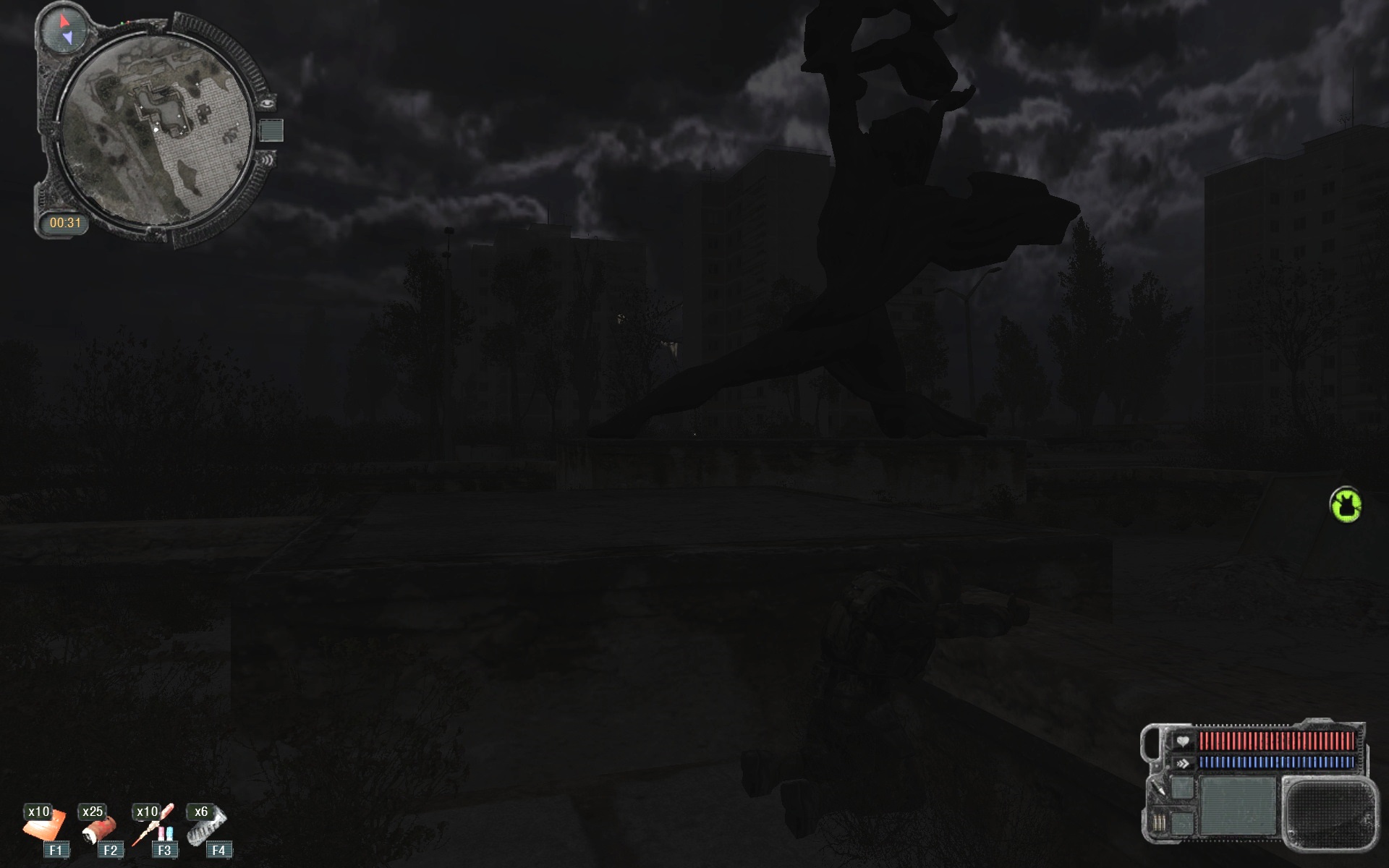
I was honestly surprised by the intensity of this feeling of loneliness coming from a computer game.

Anyhow, I survived, morning came, and I was able to explore parts of Pripyat that I did not visit during the more intense game playing earlier. And thus, I happened upon a famous Pripyat landmark, the town’s never used Ferris wheel:

The Ferris wheel, along with the rest of Pripyat’s brand new amusement park, was set to open on May 1, 1986; unfortunately, the power plant disaster on April 26 scuttled those plans.

Sadly, I was unable to explore the Ferris wheel up close; it is located outside the region of Pripyat that is accessible to the player. But the area that can be explored is huge and terrifyingly gloomy, looking a little bit like pictures from North Korea:
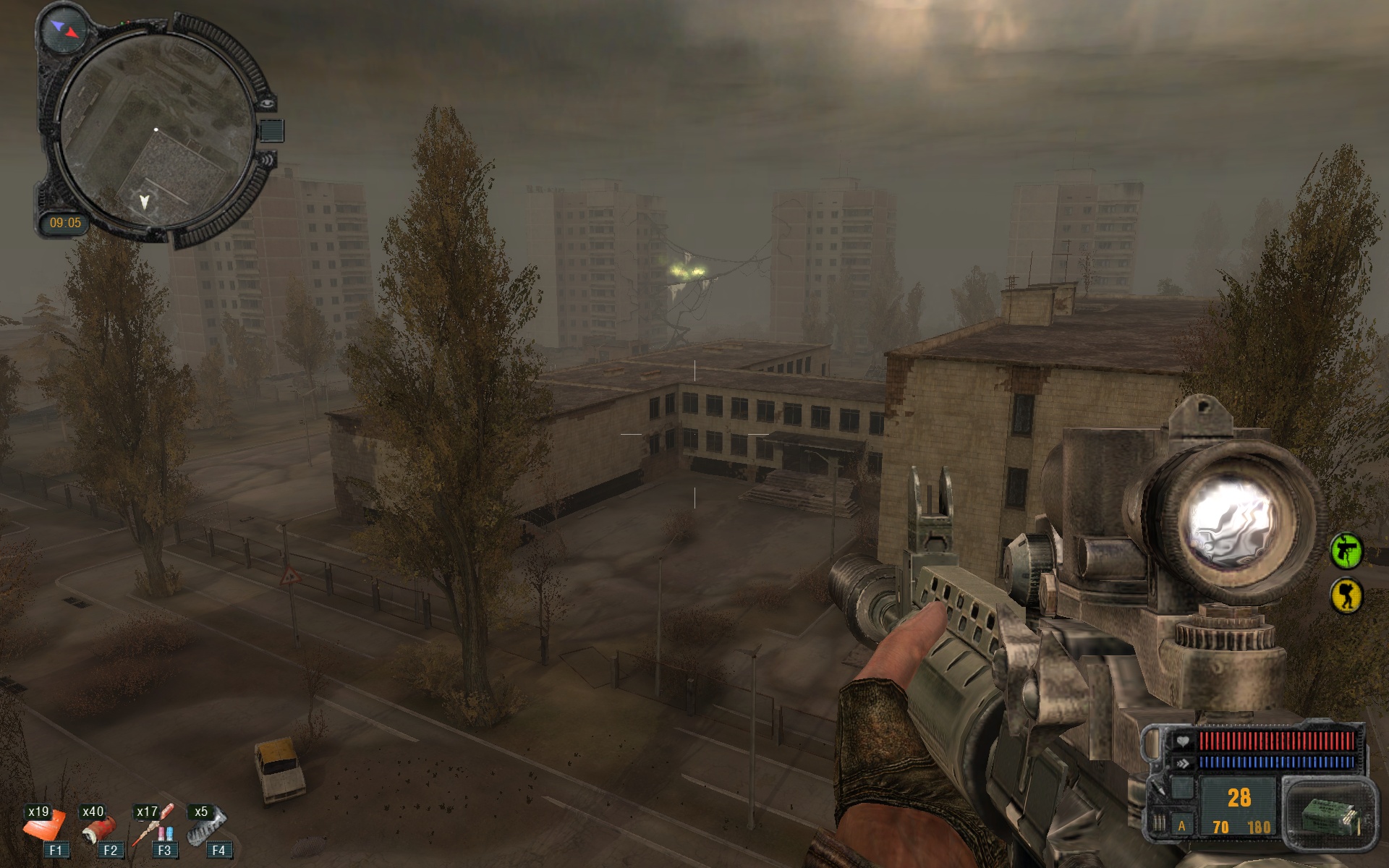
As to the abandoned Soviet-era facilities, here is a splendid example:
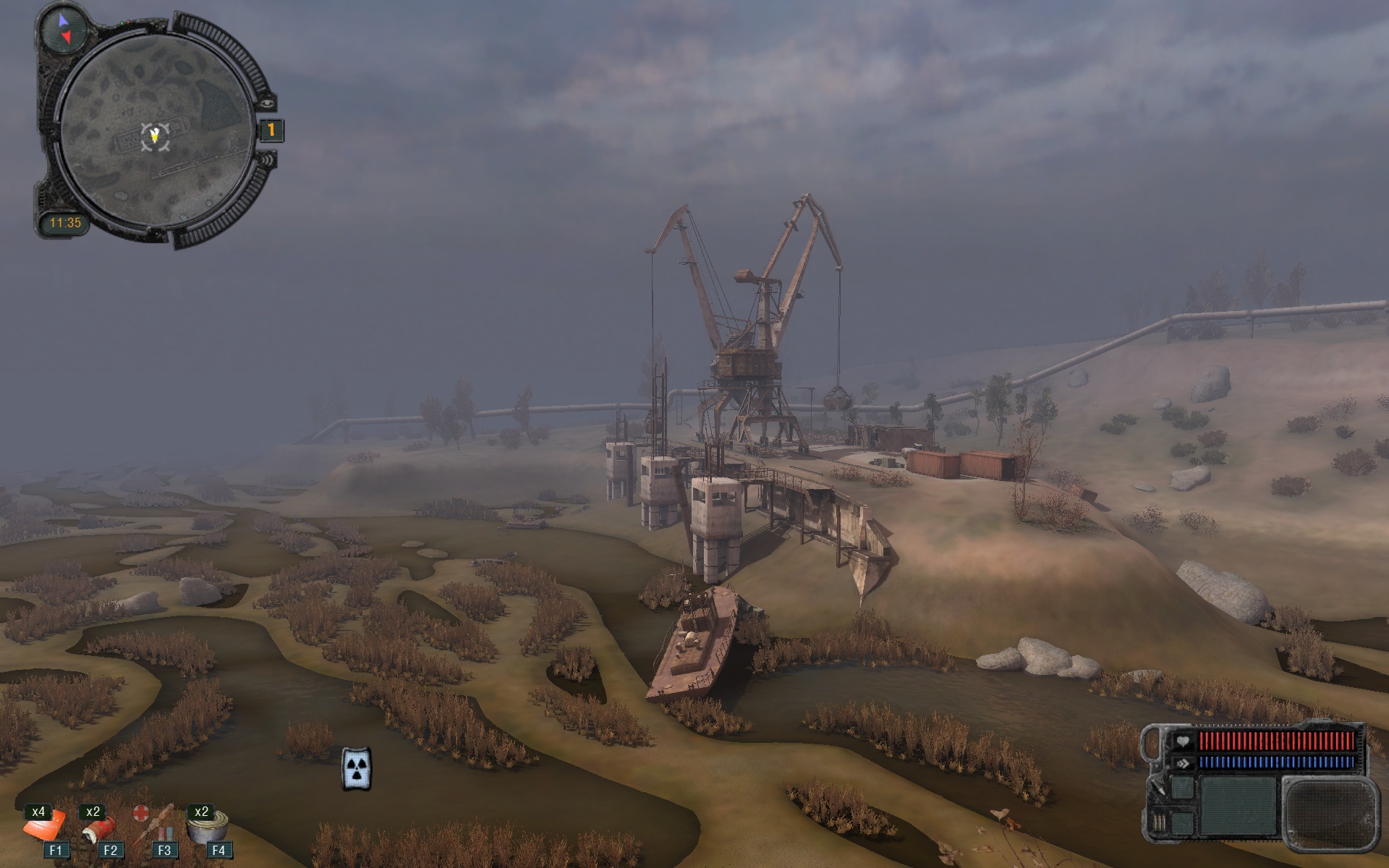
Hey, when I took that screen shot, the Sun was almost shining!

The Sun was not shining, though, when I visited the Chernobyl nuclear plant in one of the earlier installments of the game:

But what a place it was. Mostly quiet deadly, even with the best equipment my game persona could muster.

Oh well, it was fun to play these games. Time to get back to work, though.
 Posted by at 1:33 pm
Jun 232016
 

Ever since I first laid my hands on INFOCOM’s legendary titles like Zork, A Mind Forever Voyaging, and The Hitchhiker’s Guide to the Galaxy, I’ve been a sucker for high quality computer adventure games.

Over the years, the genre evolved from text-based games to point-and-click graphical adventures, often set in freely explorable worlds. Myst remains a perfect example.

And then came The Longest Journey, one of the most epic adventure games ever created. Sure, its graphics and user interface are somewhat primitive by present-day standards, but the game was exciting, interesting, and—not unlike the best science fiction stories out there—it also served as a cautionary tale.

Then came its sequel, Dreamfall; a strangely flawed game with a moving storyline but stupid quirks like ill-designed action sequences that were more frustrating than enjoyable. Still, it was a great game because its story was great. But it was also unfinished.

Finally, after a successful crowdfunding campaign, came Dreamfall Chapters. Among other things its title reflects the fact that the game was released in five installments, or Books. The latest, Book Five: Redux, came out just a few days ago.

I now played this game to the end, and I remain deeply moved by its ending.

Yet I am also creeped out by the extent to which elements of the game—elements first released almost two years ago!—resemble present-day politics. Most notably, a political election campaign fought between a xenophobic populist whose party promises a new dawn, and a female center-left politician whose campaign turns out to be rather more corrupt than many thought. Sounds familiar? I emphasize, this part of the story was written in 2014 or before. Life imitating art? A mere coincidence? Or prophetic vision?

Cautionary tales are the best that the science fiction genre can offer. Dreamfall Chapters certainly did not disappoint.

 Posted by at 10:07 pm
May 182016
 

A question on Quora made me reminisce about old computer games that make me feel somewhat nostalgic.

I’ve been involved with computer games both as a player and in a professional capacity for a very long time.

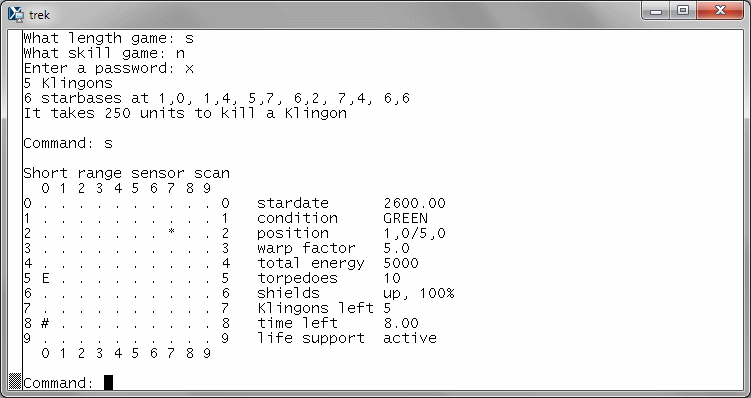
Long before I laid my hands on a personal computer, I was an avid player of Trek on a PDP/11. This was a game written for text terminals, simulating the mission of the Starship Enterprise through Klingon-infested space:

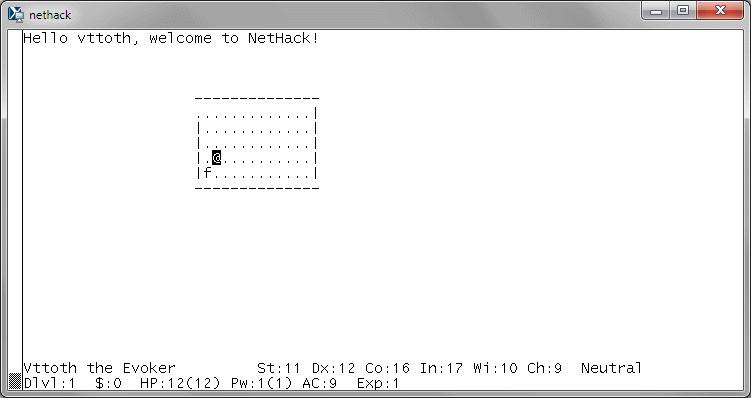
Another game of similar vintage, which I used to play on a peer-to-peer QNX network, is Hack:

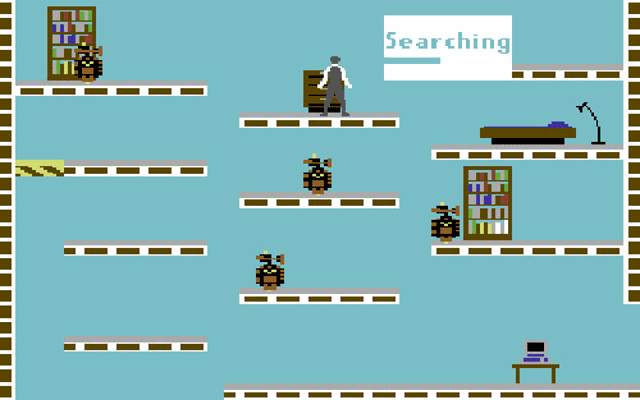
Then there was the Commodore-64. Here are two Commodore-64 games that I remember fondly. Impossible Mission:

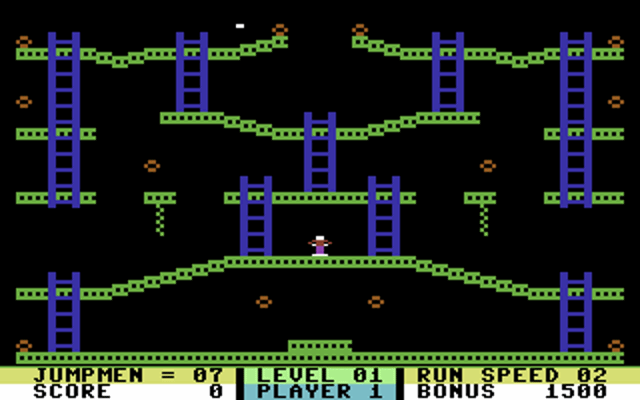
And Jumpman:

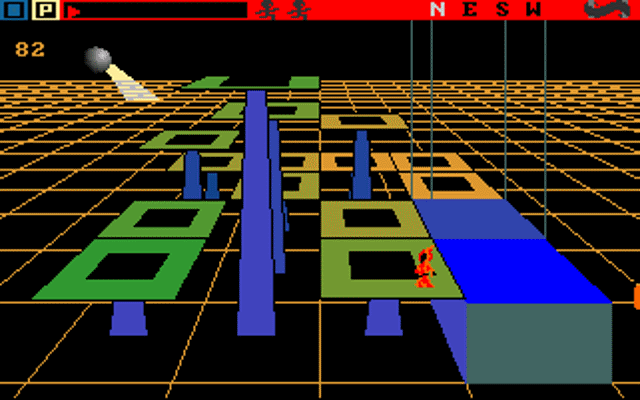
After the Commodore-64 came the Amiga. One of the first games I played on the Amiga 500 was the absolutely surrealist Mind Walker:

Very weird game. Memorable, algorithm-generated music. Ahead of its time.

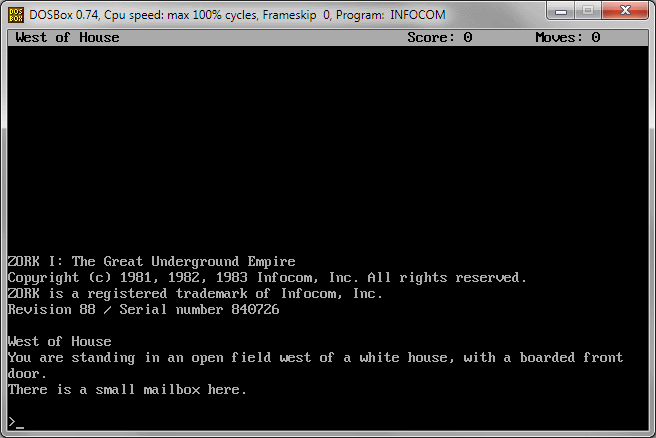
Moving on to the PC (actually, I first played these on the Atari ST), there are the classic INFOCOM games. (Yes, I am taking the liberty of classifying pure text adventure games as “video games”.) Best known perhaps is Zork:

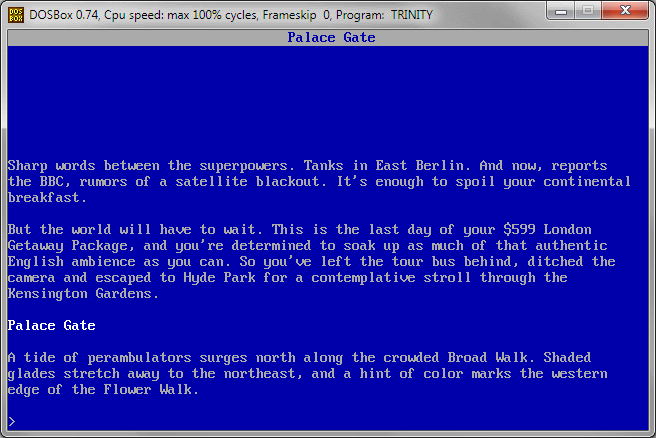
But there was also the unforgettable apocalyptic story of Trinity:

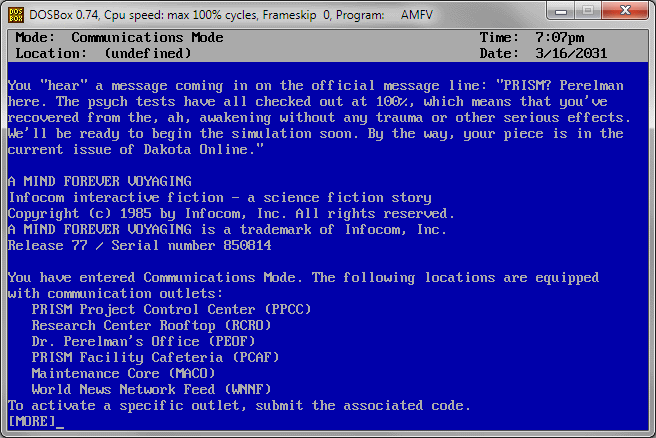
The equally unforgettable A Mind Forever Voyaging in which you get to play a disembodied artificial intelligence:

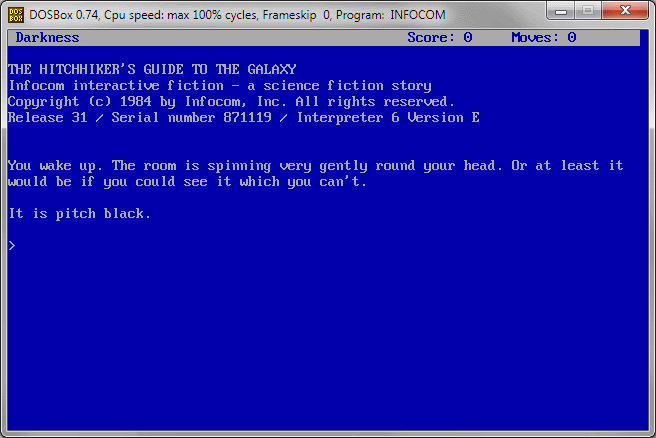
And the hilarious Hitchhiker’s Guide to the Galaxy with its fiendishly impossible puzzles:

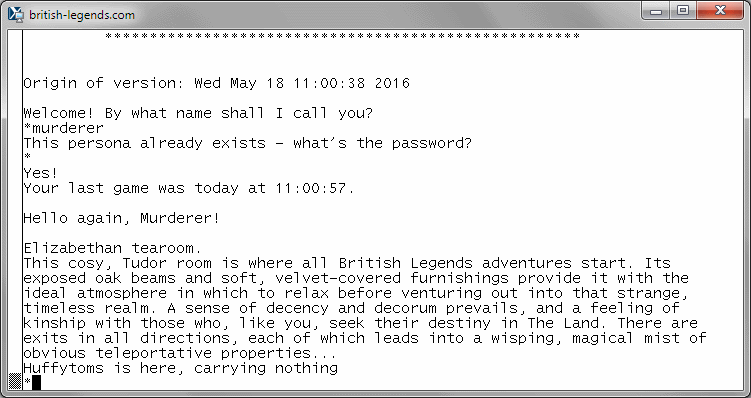
Still on the text game front, back in 1991 I began playing what was for me the first multiplayer online game, British Legends, aka. MUD (Multi-User Dungeon):

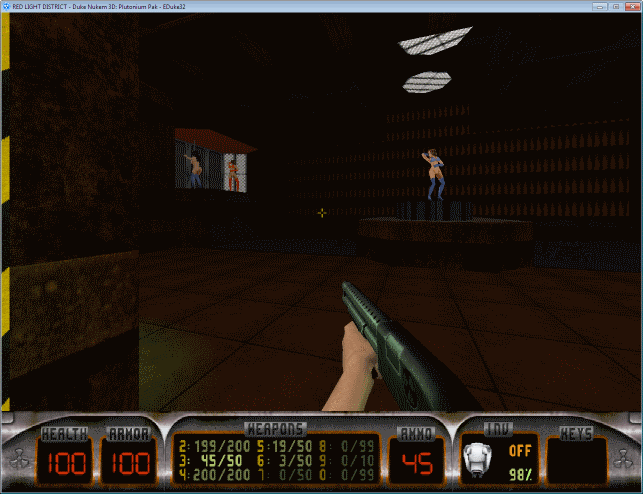
Meanwhile, on my PC, I was busy playing Duke Nukem, its platform versions first, eventually moving on to Duke Nukem 3D (which exists to this day in a community supported 32-bit high-resolution version, complete with NSFW imagery):

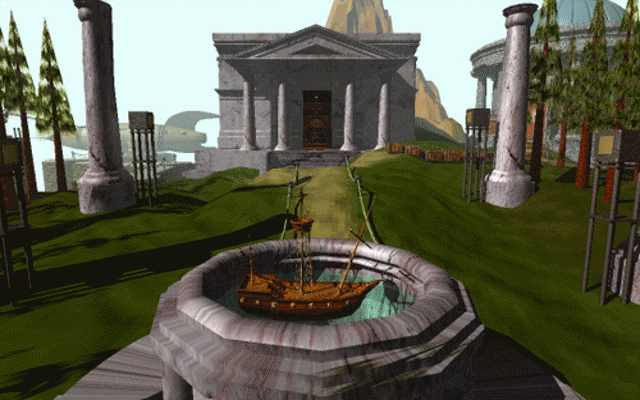
And then came Myst, the “killer app” for CD-ROMs:

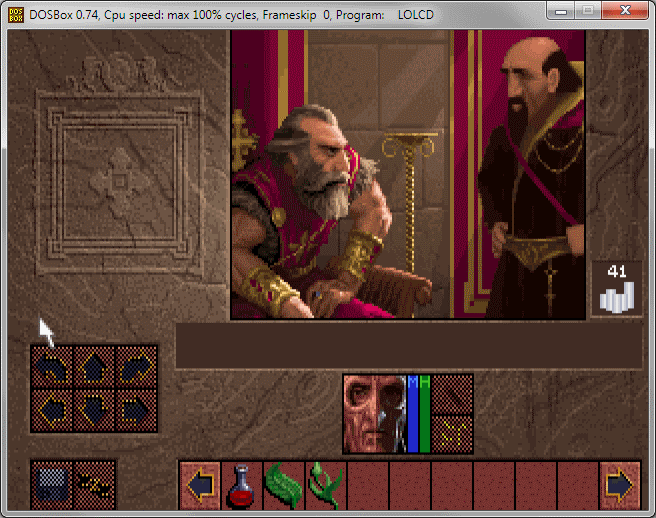
Last but not least, a game that gave me tremendous amounts of joy, Lands of Lore: Guardians of Destiny (with none other than Patrick Stewart lending his voice acting skills to the CD version):

I remember all these games very fondly. And they are all still eminently playable, and very enjoyable, to this day.

 Posted by at 3:42 pm
Dec 092013
 

Here is something new: America’s ever watchful National Security Agency is not content with spying in all the real lands of the world. Their interests also extend to imaginary realms, like the virtual world of Second Life and World of Warcraft.

Ostensibly, their concern is that terrorists around the world might be using online games for secret communication. The idea is not, in fact, new; for what it’s worth, a similar idea exists as a plot device in Margaret Atwood’s superb, dystopian Oryx and Crake trilogy.

So I guess I should count it as a blessing that other aspects of Atwood’s nightmarish future have not become reality yet. Instead of corporatist anarchy, all we have is a benevolent superstate ever more keen on enforcing Pax Americana. And who knows… our freedoms and privacy may be somewhat curtailed in this New World Order, but if the Roman example is any guide, it may be a small price to pay for centuries of stable prosperity.

Anyhow, for what it’s worth, as far as I know there is no spying going on in MUD1/British Legends and MUD2. I can actually vouch for MUD1 personally; I, after all, wrote the code for the current implementation.

 Posted by at 9:23 pm
Jan 172013
 

signonMany years ago, I created a form where players can sign up to play MUD2. To keep things relatively uncomplicated, I just created two fields for the player’s name: one labeled “Last Name” and the other, “First Name and Initials”. To me it was self-evident that if I encountered a form like this, I’d enter “Toth” and “Viktor T.”, respectively, into these fields.

But soon I found out that I was wrong. I got one signup after another like “Doe”, “John JD”. Or “Doe”, “John, JAD” if the delinquient’s middle name happened to start with an A.

What’s wrong with my form, I asked? Perhaps it’s my English? I quickly Googled “First name and initials” and found a great many hits. It was clear from the context that none of them asked for all your initials, only the initials of any additional given names that you might have, just like I did. Yet registrations in the form of Doe, John JD kept on coming. Do these people write “John JD” on passport and other official forms, too, when they are requested to enter their “Middle name and initials”?

Just to be absolutely clear, though, I added an asterisk to the field and a note: “*In case there’s a misunderstanding, this means any EXTRA initials you might have. If you’re called John A. Doe, put John A. in this field, not John JAD. And if you’re John Doe, well, that means that you have no initials to put here next to your first name!

It didn’t help. To this date, I continue getting registrations in the form of Doe, John JD.

Nowadays, this is more amusing than annoying. I needed to know the name and country of residence of players when we charged for MUD2, for tax purposes (among other things, I was obliged to collect the Goods and Services Tax from Canadian players.) But now that the game is free, it really doesn’t matter anymore what your name is. So long as you supply a valid e-mail address, I have a means to contact you if I must (which means almost never. And no, I don’t collect and sell e-mail addresses.) But perhaps it does illustrate why I always found programming so much easier than dealing with people.

 Posted by at 9:52 am
Dec 192008
 

Sad news today: at the age of 76, Majel Roddenberry, aka. Nurse Christine Chapel from Star Trek and Lwaxana Troi from Star Trek: TNG, has passed away today. My she rest in peace.

Her husband, Star Trek creator Gene Roddenberry, passed away over 17 years ago, on October 24, 1991. That date is memorable to me for another reason: it was on the morning of that day that I became a wizard of Richard Bartle’s classic multiplayer computer game, MUD (Multi-User Dungeon), aka British Legends, a game that I have ported to modern 32-bit platforms nearly a decade later and that I have been hosting ever since.

 Posted by at 1:27 am